
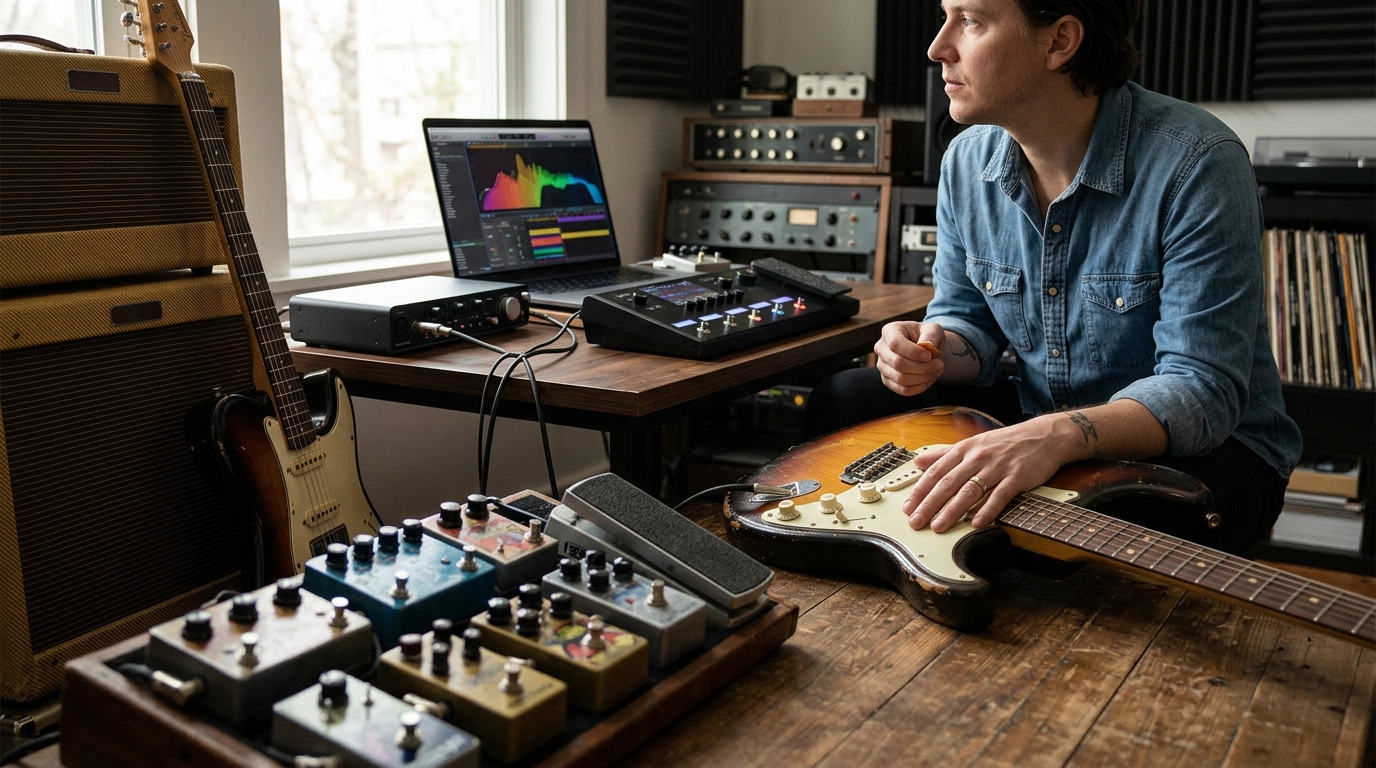
The pursuit of the perfect guitar tone has evolved from simple analog circuits to complex digital algorithms. According to recent industry data, the global guitar effects market is projected to grow significantly through 2026, driven by a split consumer base seeking either authentic vintage warmth or modern digital versatility. This divergence creates a critical decision point for musicians who must choose between the tactile experience of boutique hardware and the infinite possibilities of digital modeling. Understanding the real-world implications of each path is essential for making an informed investment in your sonic identity.
Understanding Boutique Gear Characteristics
Boutique gear represents the pinnacle of handcrafted musical instrument amplification and effects. These units are typically built in small batches, often by hand, using high-quality components that prioritize sonic purity over mass production efficiency. The term boutique is defined as a small business that sells fashionable clothes or other goods, but in the guitar world, it specifically refers to high-end, often custom-built amplifiers and pedals.
When you engage with boutique amplifiers, you are interacting with circuits designed by engineers who are often musicians themselves. This results in a product that reacts dynamically to your playing style. For instance, the Suhr brand is renowned for its precise tonal clarity and responsive preamp stages. Similarly, Mesa Boogie continues to set the standard for high-gain tones with its rigorous testing protocols.
The tactile feedback provided by physical potentiometers, vacuum tubes, and transformers creates a non-linear response that many players find irreplaceable. This non-linearity allows for subtle nuances in volume and tone that digital emulations struggle to replicate perfectly. The investment in boutique gear is not just about the sound; it is about the connection between the player and the instrument.
The Rise of Digital Modeling Technology
Digital modeling has transformed the landscape of guitar tone generation. By using mathematical algorithms to simulate the behavior of analog circuits, digital modelers can replicate the sound of vintage amplifiers, microphones, and rooms with remarkable accuracy. This technology allows musicians to access hundreds of tones from a single unit, offering unprecedented flexibility.
Modern digital processors, such as those found in the Eventide H9 Harmonizer, demonstrate how advanced signal processing can create complex spatial effects that were previously impossible to achieve in a live setting. These devices often include built-in effects loops, expression pedal inputs, and USB connectivity for deep editing.
The primary advantage of digital modeling is consistency. Unlike tube amplifiers that require regular maintenance and can vary in tone due to component aging, digital units provide the same sound every time they are powered on. This reliability is crucial for touring musicians who need to guarantee their tone night after night. Furthermore, the ability to record directly into a digital audio workstation without a microphone setup reduces studio costs and time significantly.
Comparing Tone and Feel
The debate between boutique gear and digital modeling often centers on the subjective experience of playing. Boutique amplifiers are known for their dynamic range and compression characteristics. When you play softly, the tone remains clean and articulate. As you increase your attack, the amp breaks up naturally, providing a musical distortion that responds to your touch.
Digital modelers, on the other hand, offer precision and control. They can emulate the exact frequency response of a specific microphone placed at a specific distance from a speaker cone. This level of detail allows for surgical tone shaping that is difficult to achieve with analog gear alone. However, some players argue that the digital signal path lacks the "air" and organic movement of a real speaker cabinet.
| Feature | Boutique Analog Gear | Digital Modeling |
|---|---|---|
| Tonal Character | Warm, dynamic, non-linear | Precise, consistent, versatile |
| Maintenance | High (tube replacement, biasing) | Low (firmware updates) |
| Portability | Heavy, fragile | Light, durable |
| Tone Variety | Limited to circuit design | Unlimited presets and patches |
| Price Point | High ($1,500+ for amps) | Variable ($200-$3,000) |
Practical Application Scenarios
Choosing between boutique gear and digital modeling depends largely on your specific musical needs. If you are a studio musician who requires a wide range of tones for different sessions, digital modeling offers the efficiency and variety needed to meet tight deadlines. The ability to switch from a clean Fender-style sound to a high-gain Marshall tone instantly is invaluable in a professional studio environment.
Conversely, if you are a gigging musician who values the aesthetic and tactile experience of a stage setup, boutique gear may be the better choice. The visual appeal of a hand-wired amplifier and the physical interaction with its controls can enhance the performance experience. Additionally, the resale value of well-maintained boutique gear often remains high, making it a sound financial investment over time.
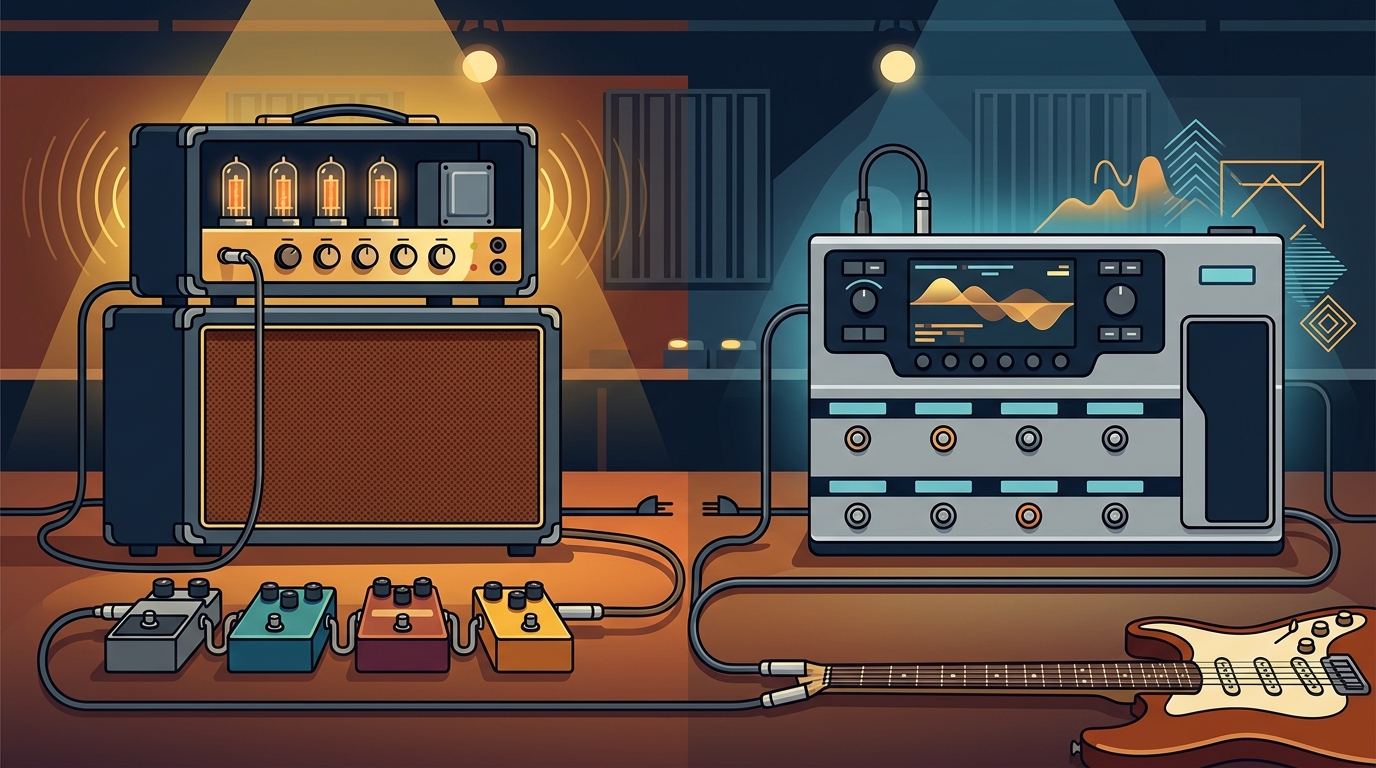
For home recording enthusiasts, a hybrid approach is increasingly popular. Many players use a digital modeler for convenience and practice, while keeping a boutique amplifier for specific recording sessions where the analog warmth is essential. This strategy allows for the best of both worlds, leveraging the strengths of each technology.
Key Takeaways
- Boutique gear offers dynamic, non-linear tonal characteristics that respond directly to playing dynamics.
- Digital modeling provides consistent, versatile tones with minimal maintenance requirements.
- The global guitar effects market is expanding, reflecting a growing demand for both analog and digital solutions.
- High-end brands like Suhr and Mesa Boogie continue to define the standards for boutique amplification.
- Digital processors like the Eventide H9 demonstrate the advanced capabilities of modern signal processing.
- Studio musicians often prefer digital modeling for its speed and variety, while gigging musicians may prioritize the feel of boutique gear.
- A hybrid setup can offer the flexibility of digital modeling with the warmth of analog amplification.
Frequently Asked Questions
Is digital modeling as good as a real amplifier?
Modern digital modeling technology has reached a level of sophistication where it is nearly indistinguishable from real amplifiers in a recorded context. However, the physical interaction and dynamic response of a real amplifier remain unique experiences that some players prefer for live performance.
What is the difference between boutique and standard gear?
Boutique gear is typically hand-built in small quantities using premium components, focusing on specific tonal goals. Standard gear is mass-produced to appeal to a broader market, often prioritizing cost-effectiveness and feature variety over singular tonal perfection.
Can I use a digital modeler with a real amplifier?
Yes, many digital modelers include a send/return loop that allows you to use the digital unit for effects while running the signal through a real amplifier. This hybrid approach combines the versatility of digital processing with the power and tone of analog amplification.
How much does boutique gear cost?
Boutique amplifiers and pedals vary widely in price. Entry-level boutique pedals can start around $300, while high-end boutique amplifiers often range from $2,000 to over $10,000, depending on the brand and customization options.
Do I need to maintain digital modelers?
Digital modelers require minimal maintenance compared to analog gear. The primary upkeep involves keeping the firmware updated to access new features and improvements. There are no tubes to replace or circuits to bias, making them a low-maintenance option for busy musicians.
What brands does The Guitar Sanctuary carry?
The Guitar Sanctuary carries a wide selection of boutique and high-end gear, including brands like Suhr, Mesa Boogie, PRS, and 3rd Power, as well as advanced digital processors like the Eventide H9.
Find Your Sound at The Guitar Sanctuary
Whether you are drawn to the timeless warmth of boutique amplification or the cutting-edge versatility of digital modeling, The Guitar Sanctuary offers the expertise and inventory to help you find your perfect tone. Our team of musicians and technicians is dedicated to guiding you through the nuances of high-end gear. Visit our store to explore our collection or contact us to schedule a consultation. We are open Tuesday through Saturday from 10 AM to 6 PM. Call or text us at (972) 540-6420 to discuss your specific needs and discover the gear that will define your musical journey.