
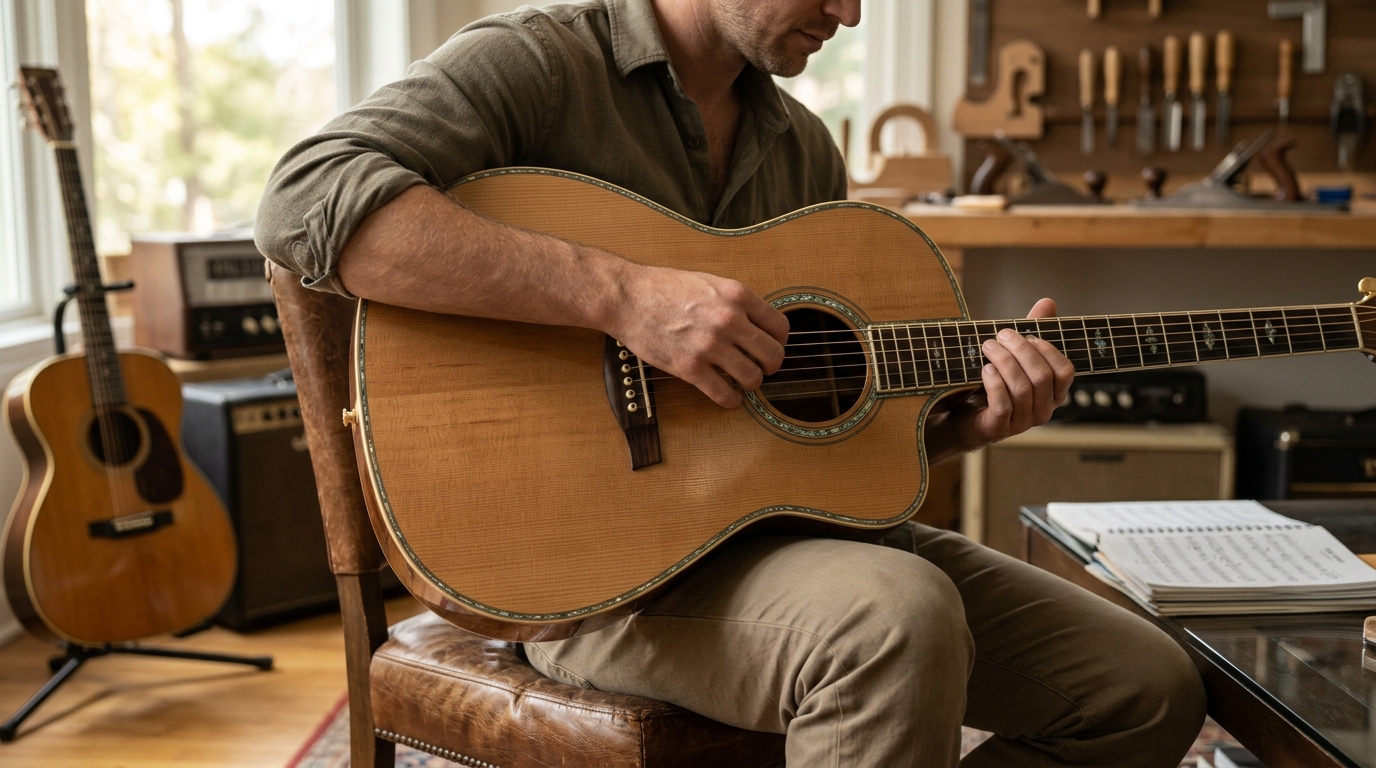
Benefits of Buying a Custom Acoustic Guitar: Tone & Craftsmanship
Investing in a bespoke instrument fundamentally alters the relationship between a musician and their gear. According to recent industry analysis on premium instrument sales, the market for custom-built acoustic guitars has seen a steady growth in high-end demand as players prioritize unique tonal characteristics over mass-produced uniformity. This shift reflects a broader understanding that wood selection, bracing patterns, and finish thickness are not merely aesthetic choices but critical acoustic variables. When you commission a custom instrument, you are essentially commissioning a specific sonic signature that cannot be replicated by factory lines.
Tonal Precision and Wood Selection
The primary advantage of a custom build is the absolute control over tonal materials. In a factory setting, luthiers must use wood that meets general quality standards, often resulting in inconsistent grain patterns and density variations. A custom builder allows you to select specific tonewoods based on their acoustic properties. For example, Adirondack spruce is known for its high stiffness-to-weight ratio, providing exceptional dynamic range and projection. Conversely, European spruce offers a warmer, more complex midrange suitable for fingerstyle players.
Wood selection extends beyond the top plate. The choice of back and side woods dramatically influences the instrument's sustain and harmonic content. Indian rosewood is the standard for deep bass and sparkling highs, while koa provides a focused midrange with a quick decay that cuts through a mix. By specifying these materials, you ensure the guitar responds to your playing style rather than forcing you to adapt to the instrument's limitations.
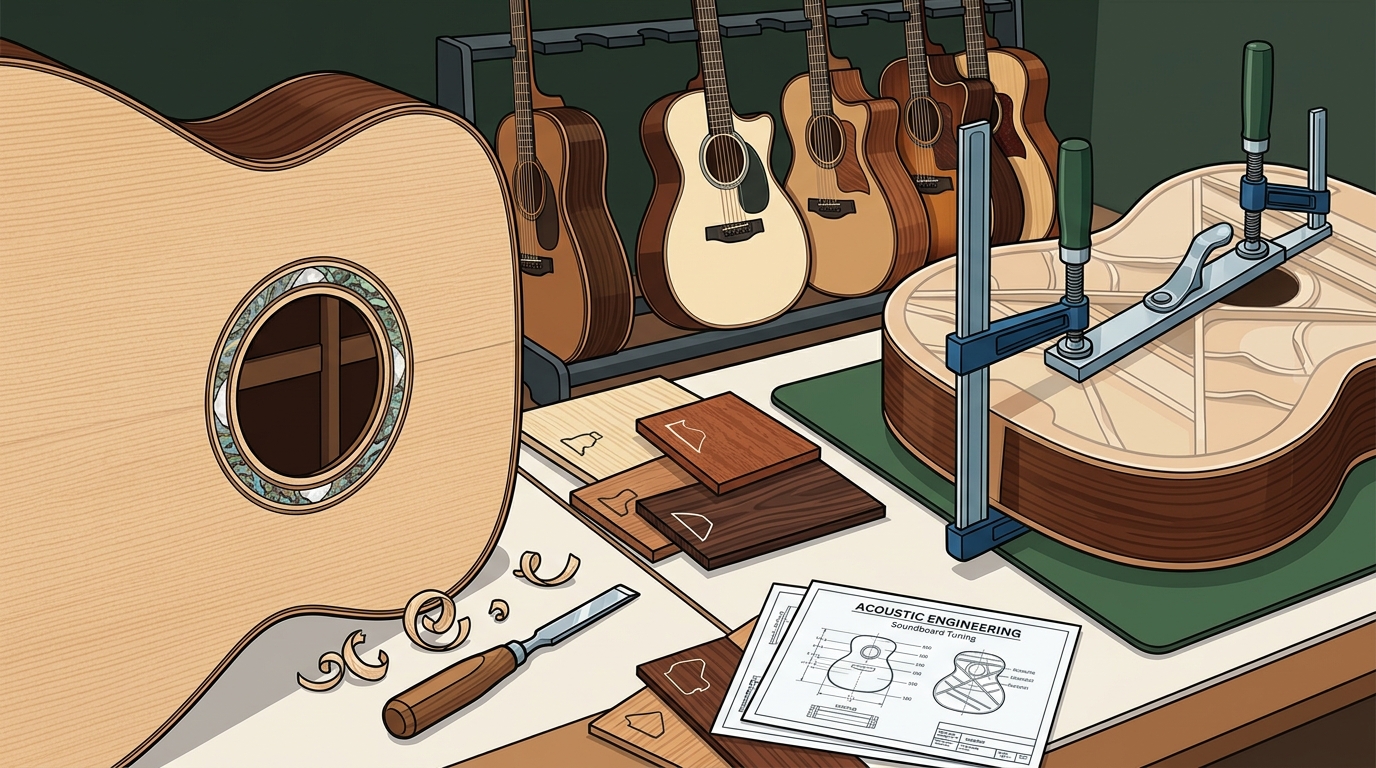
Furthermore, the bracing pattern is a critical component of custom acoustic design. Traditional X-bracing is common, but modern builders offer scalloped, forward-shifted, or even lattice bracing. These modifications allow the top plate to vibrate more freely, increasing volume and responsiveness. At The Guitar Sanctuary, we work with builders who understand how subtle changes in bracing geometry affect the overall voice of the instrument.
Ergonomic Fit and Playability
Mass-produced guitars are built to fit the "average" player, which often means they do not fit you. A custom acoustic guitar is carved to match your body dimensions and playing posture. This includes the depth of the body, the width of the neck, and the contour of the armrest. For players with smaller hands or those who suffer from wrist strain, a custom neck profile can be the difference between a comfortable session and physical pain.
The scale length is another variable that affects playability and tone. A shorter scale length, such as 24.75 inches, reduces string tension, making bending notes easier and producing a warmer tone. A longer scale, like 25.5 inches, increases tension for greater clarity and volume. Custom builders can tailor this specification to your preferred tuning and genre. Whether you are a flatpicker or a fingerstyle artist, the feel of the instrument becomes an extension of your hands.
Additionally, the finish thickness plays a role in how the wood vibrates. Traditional nitrocellulose lacquer is thin and allows the wood to resonate more freely than the thick polyurethane finishes often used in factory instruments. This results in a guitar that "opens up" over time, becoming more responsive as it ages. The Guitar Sanctuary Blog frequently discusses how finish types impact the longevity and sonic evolution of high-end instruments.
Long-Term Investment Value
While the upfront cost of a custom guitar is higher than a factory model, the long-term value proposition is distinct. Custom instruments are built with superior materials and craftsmanship that age gracefully. Unlike mass-produced guitars, which often depreciate rapidly, a well-made custom instrument can hold its value or even appreciate over time. This is particularly true for instruments built by renowned luthiers or those using rare, sustainable tonewoods.
The durability of a custom build is also superior. Builders use traditional joinery techniques and high-quality glues that withstand temperature and humidity changes better than factory adhesives. This structural integrity ensures that the guitar remains playable for decades. For serious musicians, a custom guitar is not just a purchase but a legacy item that can be passed down through generations. The Repair Services at The Guitar Sanctuary are equipped to maintain these high-end instruments, ensuring they retain their structural and tonal integrity.
Custom vs. Boutique vs. Factory
Understanding the differences between custom, boutique, and factory guitars helps clarify the benefits of each. A factory guitar is produced in large quantities with automated machinery, prioritizing consistency and affordability. A boutique guitar is hand-built in smaller batches, often by a single luthier or a small team, offering higher quality than factory models but with less individual customization. A custom guitar is built from the ground up for a specific individual, offering the highest level of personalization.
| Feature | Factory Guitar | Boutique Guitar | Custom Guitar |
|---|---|---|---|
| Production Volume | High (Mass Produced) | Low (Small Batch) | One-of-a-Kind |
| Wood Selection | Standardized | Curated | Personalized |
| Playability | Generic Fit | Improved Fit | Tailored to Player |
| Tonal Character | Uniform | Distinctive | Unique Signature |
| Investment Potential | Low | Moderate | High |
At The Guitar Sanctuary, we curate a selection of boutique and custom instruments from top builders. This allows you to experience the benefits of high-end craftsmanship without necessarily waiting for a custom order. However, for those seeking a truly unique instrument, the custom route offers unparalleled benefits.
Key Takeaways
- Tonal Control: Custom builds allow for specific wood selection and bracing patterns to achieve a desired sound.
- Ergonomic Fit: Instruments are carved to match the player's body, reducing strain and improving comfort.
- Playability: Neck profiles and scale lengths can be tailored to individual playing styles and techniques.
- Investment Value: High-quality materials and craftsmanship ensure long-term durability and potential appreciation.
- Unique Identity: A custom guitar is a one-of-a-kind instrument that reflects the player's personal taste.
- Builder Relationship: Direct communication with the luthier ensures the final product meets exact specifications.
- Aging Potential: Traditional finishes and construction methods allow the instrument to improve with age.
Frequently Asked Questions
How long does it take to build a custom acoustic guitar?
Typically, the process takes between six months to a year. This timeline includes wood selection, construction, drying, and finishing. The duration ensures that the wood stabilizes and the finish cures properly, resulting in a superior instrument.
Can I choose the wood for my custom guitar?
Yes, wood selection is a core part of the custom process. You can choose the top, back, and side woods, as well as the neck and fretboard materials. Builders often provide samples to help you make informed decisions based on tonal preferences.
Is a custom guitar worth the extra cost?
For serious musicians, the answer is often yes. The benefits include superior tone, perfect fit, and unique aesthetics. Additionally, custom guitars often hold their value better than factory models, making them a sound financial investment over time.
What is the difference between a custom and a boutique guitar?
A boutique guitar is built in small batches by a single luthier or small team, offering high quality but limited customization. A custom guitar is built specifically for one player, allowing for complete personalization of every aspect of the instrument.
Do I need to visit the builder in person?
While visiting is beneficial, it is not always required. Many builders work remotely with clients, using detailed measurements and communication to ensure the guitar fits perfectly. Contact us to discuss your options for remote consultation.
How do I maintain a custom acoustic guitar?
Regular maintenance includes keeping the guitar in a stable humidity environment, using appropriate cleaning products, and scheduling professional setups. The Guitar Sanctuary offers expert repair and maintenance services to keep your instrument in peak condition.
Can I modify an existing guitar to be more custom?
While modifications can improve playability, they cannot replicate the benefits of a new custom build. Changing the bracing or wood structure requires a complete rebuild. It is often more cost-effective to commission a new instrument than to attempt major modifications on an existing one.
Visit The Guitar Sanctuary
Ready to experience the benefits of a custom acoustic guitar? Whether you are looking for a bespoke build or a curated boutique instrument, The Guitar Sanctuary is your destination for high-end gear. Visit our store in Texas or browse our online collection to find the perfect instrument for your needs. Our team of experts is ready to help you find your dream guitar.