
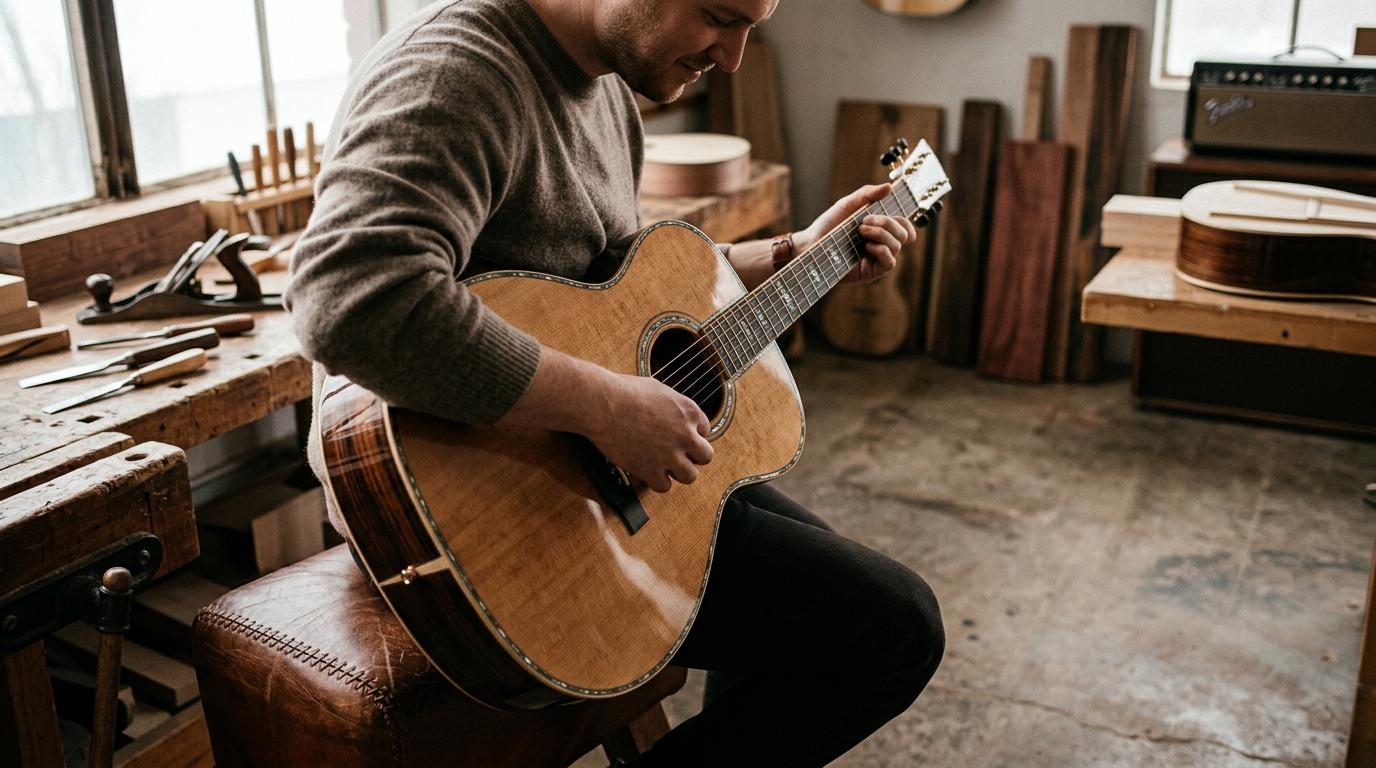
Investing in a custom acoustic guitar is not merely a purchase; it is a strategic acquisition of a lifelong musical partner. According to recent industry analyses, the market for high-end, handcrafted instruments has seen a steady growth in demand for personalized tonal profiles among professional musicians and serious enthusiasts. This shift reflects a broader understanding that mass-produced instruments, while reliable, often lack the nuanced character and ergonomic precision that a bespoke build provides. The tangible outcomes of this investment extend far beyond the initial unboxing experience, influencing everything from playing comfort to long-term financial value.
Ergonomic Precision and Playing Comfort
One of the most immediate tangible outcomes of a custom build is the elimination of physical strain. Mass-produced guitars are designed to fit the "average" player, a statistical middle ground that often excludes individuals with smaller hands, larger frames, or specific playing styles. A custom instrument is carved to your exact specifications, ensuring that the neck profile, body depth, and scale length align perfectly with your anatomy.
Neck Profile Matching
The neck is the primary interface between the player and the instrument. Whether you prefer the slim, fast feel of a modern C-shape or the substantial, vintage-style U-shape, a luthier can shape the neck to match your hand size and grip preference. This precision reduces fatigue during long practice sessions and allows for faster, more accurate fretting. According to ergonomic studies on musical performance, proper instrument ergonomics significantly reduces the risk of repetitive strain injuries in musicians.
Body Contouring
Custom builders often offer arm contours, lower bout carving, and back relief. These subtle modifications allow the guitar to sit comfortably against your body, whether you are seated or standing. This level of detail ensures that the instrument feels like an extension of your body rather than an object you are holding.
Tonal Customization and Voice
The most significant outcome of a custom acoustic guitar is the ability to dictate its voice. Unlike production models, which are designed to appeal to a broad audience, a custom guitar is engineered to produce the specific tonal characteristics you desire. This process involves selecting tonewoods, bracing patterns, and finish types that work in harmony to create a unique sound.
Tonewood Selection
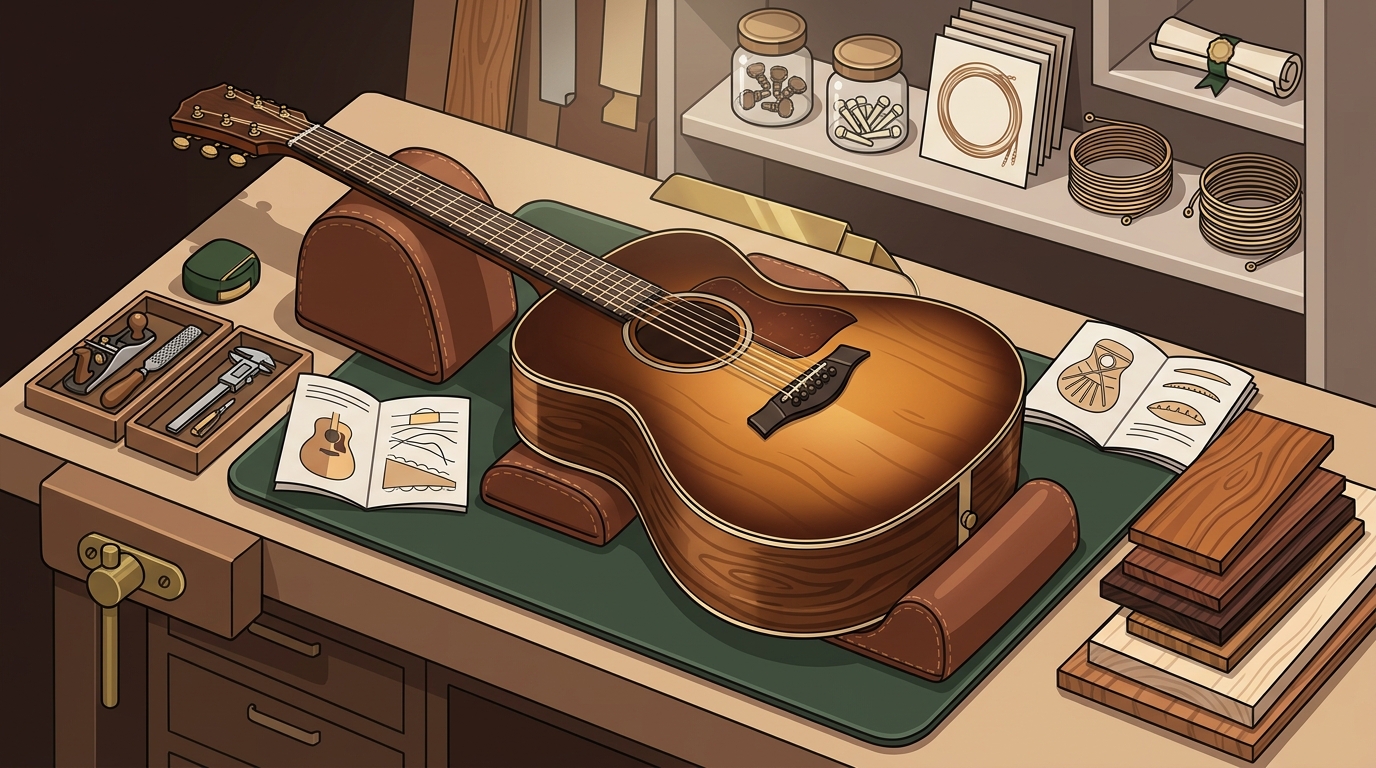
The choice of tonewoods is critical. Sitka spruce tops are known for their dynamic range and clarity, while Adirondack spruce offers a more aggressive, powerful voice. For back and sides, Indian rosewood provides deep bass and sparkling highs, while European spruce delivers a focused, complex midrange. At The Guitar Sanctuary, we specialize in sourcing premium tonewoods that ensure your instrument has the acoustic potential to grow and mature over time.
Bracing Patterns
Bracing is the skeleton of the guitar and dictates how the top vibrates. Scalloped bracing allows for greater top movement, resulting in a louder, more resonant instrument. Forward-shifted bracing can enhance midrange frequencies, making the guitar ideal for fingerstyle playing. A skilled luthier will adjust these parameters to match your playing style, whether you are a flatpicker, fingerpicker, or hybrid player.
Build Quality and Material Selection
Custom guitars are built with a level of craftsmanship and attention to detail that mass production cannot replicate. Every joint, every seam, and every finish is executed by hand, ensuring structural integrity and aesthetic perfection. This commitment to quality results in an instrument that is not only beautiful but also durable and stable.
Handcrafted Details
From the intricate rosette inlays to the precision binding, every detail is a testament to the luthier's skill. These elements are not merely decorative; they contribute to the overall structural stability and acoustic performance of the guitar. For example, the way the neck is joined to the body can affect the transfer of vibrations and the sustain of the instrument.
Finish Options
The finish protects the wood and influences the tone. Nitrocellulose lacquer is a traditional choice that allows the wood to vibrate freely and ages gracefully, developing a patina over time. Polyurethane finishes are more durable but can sometimes dampen the wood's resonance. A custom builder will guide you through these options to find the right balance of protection and tonal transparency.
Financial Value and Appreciation
While the initial cost of a custom guitar is higher than that of a production model, the long-term financial outcomes can be favorable. High-quality custom instruments often retain their value better than mass-produced guitars, and some may even appreciate over time. This is particularly true for instruments built by renowned luthiers or those made with rare, sustainable tonewoods.
Investment Potential
According to market data on collectible musical instruments, vintage and custom guitars have shown strong resilience in value compared to other luxury goods. This stability is due to the limited supply of high-quality handcrafted instruments and the enduring demand from collectors and professionals. Investing in a custom guitar is, therefore, not just a purchase of a tool but an acquisition of an asset.
Resale Market
Custom guitars often have a dedicated resale market among enthusiasts who appreciate the craftsmanship and unique features. If you decide to upgrade in the future, a well-maintained custom instrument can command a premium price, offsetting the initial investment. This is in contrast to many production guitars, which depreciate rapidly once they leave the store.
Custom vs. Production Instruments
To understand the tangible outcomes of a custom build, it is helpful to compare them directly with production instruments. The following table outlines the key differences in various categories.
| Feature | Custom Acoustic Guitar | Production Acoustic Guitar |
|---|---|---|
| Ergonomics | Tailored to player's body and hand size | Designed for the "average" player |
| Tone | Customizable via wood and bracing choices | Standardized for broad appeal |
| Build Quality | Handcrafted with premium materials | Factory-produced with consistent quality |
| Value Retention | High potential for appreciation | Typical depreciation over time |
| Turnaround Time | 6 to 18 months | Immediate availability |
Key Takeaways
- Ergonomic Fit: Custom guitars eliminate physical strain by matching the instrument to your body.
- Tonal Control: You dictate the voice of the guitar through wood and bracing selection.
- Superior Craftsmanship: Hand-built instruments offer higher quality and attention to detail.
- Financial Stability: High-end custom guitars often retain or increase in value over time.
- Longevity: A well-built custom guitar can last a lifetime and be passed down through generations.
- Unique Identity: Your instrument will be one-of-a-kind, reflecting your personal taste and style.
- Professional Support: Working with a reputable dealer like The Guitar Sanctuary ensures a smooth and informed process.
Frequently Asked Questions
How long does it take to build a custom acoustic guitar?
The timeline for a custom build typically ranges from 6 to 18 months, depending on the complexity of the design and the luthier's current workload. This allows for proper wood seasoning and meticulous handcrafting.
Can I choose my own tonewoods for a custom guitar?
Yes, one of the primary benefits of a custom build is the ability to select your preferred tonewoods. You can choose from a wide variety of tops, backs, sides, and necks to achieve your desired tone.
Is a custom guitar worth the extra cost?
For serious players, the answer is often yes. The improved playability, unique tone, and potential for value appreciation make a custom guitar a worthwhile investment for those who play regularly.
What is the difference between a custom guitar and a limited edition?
A custom guitar is built specifically for you from scratch, whereas a limited edition is a pre-designed model produced in a small batch. Custom instruments offer greater personalization and uniqueness.
Do I need to visit a luthier in person to order a custom guitar?
While visiting is beneficial, many luthiers and dealers like The Guitar Sanctuary facilitate the process remotely through detailed consultations, photos, and video calls to ensure your vision is realized.
Can a custom guitar be modified later?
While custom guitars are built to your specifications, minor adjustments can often be made by a qualified luthier. However, major changes to the body or neck are generally not recommended.
What brands of custom guitars are available?
The market includes numerous renowned luthiers and boutique brands. At The Guitar Sanctuary, we represent a curated selection of top-tier builders known for their exceptional craftsmanship and tone.
Start Your Custom Journey
Investing in a custom acoustic guitar is a decision that pays dividends in playability, tone, and satisfaction. Whether you are seeking a specific tonal character or a perfect ergonomic fit, the process of working with a skilled luthier is rewarding in itself. To explore your options and connect with premier builders, visit The Guitar Sanctuary today. Our team is ready to help you find the perfect instrument to elevate your musical journey.