

Good condition in a vintage boutique guitar is a specific, graded state of physical and structural integrity that directly impacts both playability and long-term value. It is not merely a subjective opinion on aesthetics, but a technical assessment of wear, finish stability, and mechanical function. At The Guitar Sanctuary, we treat condition as the primary metric for determining whether an instrument is ready for the stage or the studio. Understanding these nuances protects your investment and ensures you acquire a tool that performs at the highest level.
The Hierarchy of Wear and Finish Integrity
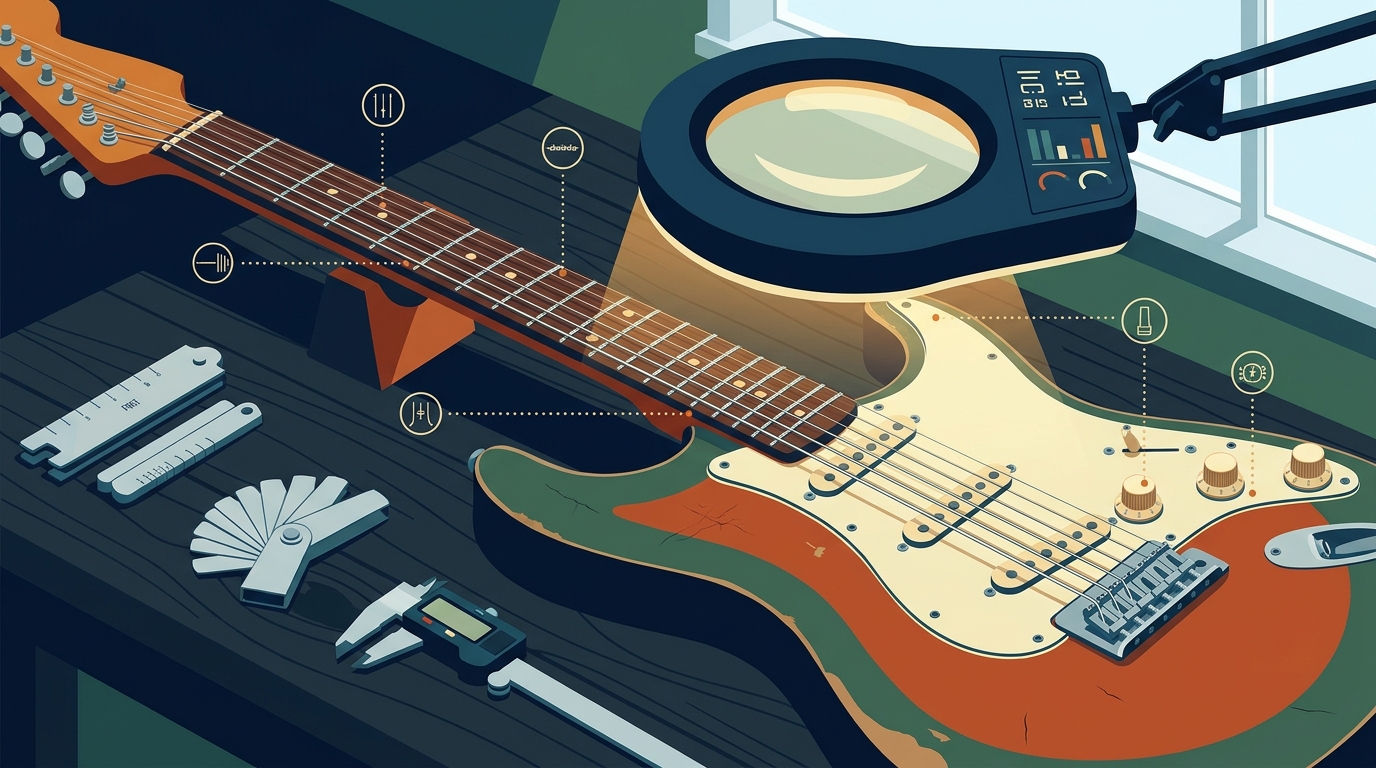
When evaluating a vintage instrument, the finish is the first line of defense and the most visible indicator of history. Finish condition is the state of the lacquer or paint layer, categorized by the presence of cracks, checks, or delamination. A guitar described as having a "stable finish" may still exhibit hairline cracks, known as checking, which are common in nitrocellulose lacquer. These cracks are often structural rather than cosmetic, provided the wood beneath remains solid. However, delamination, where the finish separates from the wood, is a critical red flag that requires professional repair before purchase.
At The Guitar Sanctuary, our in-house luthiers inspect every pre-owned instrument for these specific finish behaviors. We distinguish between "relics" (intentional aging) and "wear" (unintentional damage). For example, a 1960s Fender Stratocaster with a stable, checked finish is a different asset class than one with a refinished or delaminated top. The implication for the buyer is clear: a stable, checked finish preserves the original character, while delamination compromises the instrument's structural soundboard integrity.
Structural Soundness and Neck Alignment
Beyond the surface, the internal structure dictates the guitar's longevity. Neck alignment is the measurement of the angle between the neck and the body, which must be consistent with the manufacturer's original specifications. A neck that has shifted, often due to humidity changes or loose screws, can cause fret buzz or intonation issues that are difficult to correct without a neck reset. This is a high-cost repair that significantly reduces the value of a vintage piece.
We prioritize instruments where the neck joint remains tight and the truss rod functions correctly. For instance, a vintage Gibson Les Paul with a set-neck joint that shows no signs of separation is a strong candidate for a "good condition" rating. If the neck is loose, the guitar may play well today but will likely fail in a few years. Our team at The Guitar Sanctuary performs a multi-point inspection to verify that the neck angle and heel are secure, ensuring the instrument can withstand the rigors of touring and storage.
Hardware Functionality and Originality
Hardware is the mechanical interface between the player and the instrument. Hardware originality is the presence of the factory-installed components, such as tuners, bridges, and pickups, which are often the most valuable parts of a vintage guitar. Replacements, even high-quality ones, can lower the resale value unless the original parts are included in the sale. A "complete" set of original hardware is a key differentiator in the boutique market.
Consider a vintage PRS or a Fender Custom Shop piece. If the original locking tuners are missing and replaced with modern equivalents, the guitar is no longer a "complete" original. At The Guitar Sanctuary, we document the hardware status of every pre-owned listing. We note if parts are original, aftermarket, or missing. This transparency allows you to make an informed decision. If a guitar has functional but non-original hardware, we clearly state this in the description, helping you weigh the cost of restoration against the purchase price.
Electrical Systems and Signal Path
For electric and acoustic-electric guitars, the internal wiring is just as important as the wood. Electrical integrity is the condition of the wiring, potentiometers, capacitors, and output jacks, which determines the reliability of the signal path. Vintage wiring can suffer from dry joints, corrosion, or broken solder connections, leading to intermittent signal loss or noise. A "good condition" electrical system means all components are tested and functioning without noise or dropouts.
We test every circuit in our pre-owned inventory. For example, a vintage acoustic guitar with a Fishman or L.R. Baggs pickup system must have a clean, noise-free output. If the preamp requires a battery replacement or the wiring needs re-soldering, we perform these repairs before listing the instrument. This ensures that when you receive the guitar, it is ready to plug in and play. Our commitment to electrical integrity means you do not have to guess if the signal path is reliable.
Documentation and Provenance
Finally, the paper trail is a critical component of condition. Provenance is the documented history of ownership and maintenance, which adds credibility and value to a vintage instrument. A guitar with a clear chain of custody, including original receipts, warranty cards, or service records, is more desirable than one with an unknown history. Documentation helps verify authenticity and provides a record of past repairs.
At The Guitar Sanctuary, we provide detailed condition reports for our pre-owned and vintage gear. We include information on any repairs performed, such as fret leveling or neck resets, and we note the original accessories included. This documentation is essential for collectors and investors. It transforms a guitar from a used item into a documented asset. By providing this level of detail, we help you make a confident purchase and protect your investment for the future.
Key Takeaways
- Finish condition is the primary indicator of a guitar's history; stable checking is acceptable, but delamination is a critical flaw.
- Neck alignment must be verified to ensure the instrument's structural integrity and long-term playability.
- Hardware originality significantly impacts resale value; original parts are preferred for vintage boutique guitars.
- Electrical integrity requires testing to ensure a reliable, noise-free signal path in electric and acoustic-electric models.
- Provenance and documentation add credibility and value, transforming a used instrument into a documented asset.
- Professional inspection by a luthier is essential to verify that a "good condition" rating is accurate and reliable.
Frequently Asked Questions
What is the difference between "relics" and "wear" in a vintage guitar?
Relics are intentional aging techniques used by manufacturers to create a vintage look, while wear is unintentional damage caused by use. Relics are part of the design, whereas wear is a sign of the instrument's history.
Does a checked finish affect the guitar's tone?
A stable, checked finish generally does not affect the tone, as the wood beneath remains intact. However, delamination or deep cracks can compromise the structural integrity and potentially impact resonance.
How important is original hardware for a vintage guitar's value?
Original hardware is highly important for value, especially in boutique and vintage models. Replacements can lower the resale value, so original parts are preferred by collectors and investors.
What should I look for in the electrical system of a vintage electric guitar?
You should look for clean, noise-free output, functional potentiometers, and intact wiring. Dry joints or corrosion can cause intermittent signal loss, so professional testing is recommended.
How does The Guitar Sanctuary inspect pre-owned guitars?
Our in-house luthiers perform a multi-point inspection, checking the finish, neck alignment, hardware, and electrical systems. We provide a detailed condition report for every pre-owned instrument.
Can a vintage guitar with repairs still be a good investment?
Yes, a vintage guitar with professional repairs can still be a good investment, provided the repairs are documented and the instrument is in stable condition. The key is transparency and quality of work.
Conclusion
Understanding what "good condition" truly means is essential for any buyer of vintage boutique guitars. It requires looking beyond surface aesthetics to assess structural integrity, hardware originality, and electrical reliability. At The Guitar Sanctuary, we provide the expertise and documentation you need to make a confident purchase. Whether you are looking for a Fender Custom Shop, a PRS Private Stock, or a rare vintage find, our team ensures that every instrument meets our exacting standards. To explore our curated collection of pre-owned and vintage gear, visit our pre-owned section or for a personalized consultation.