
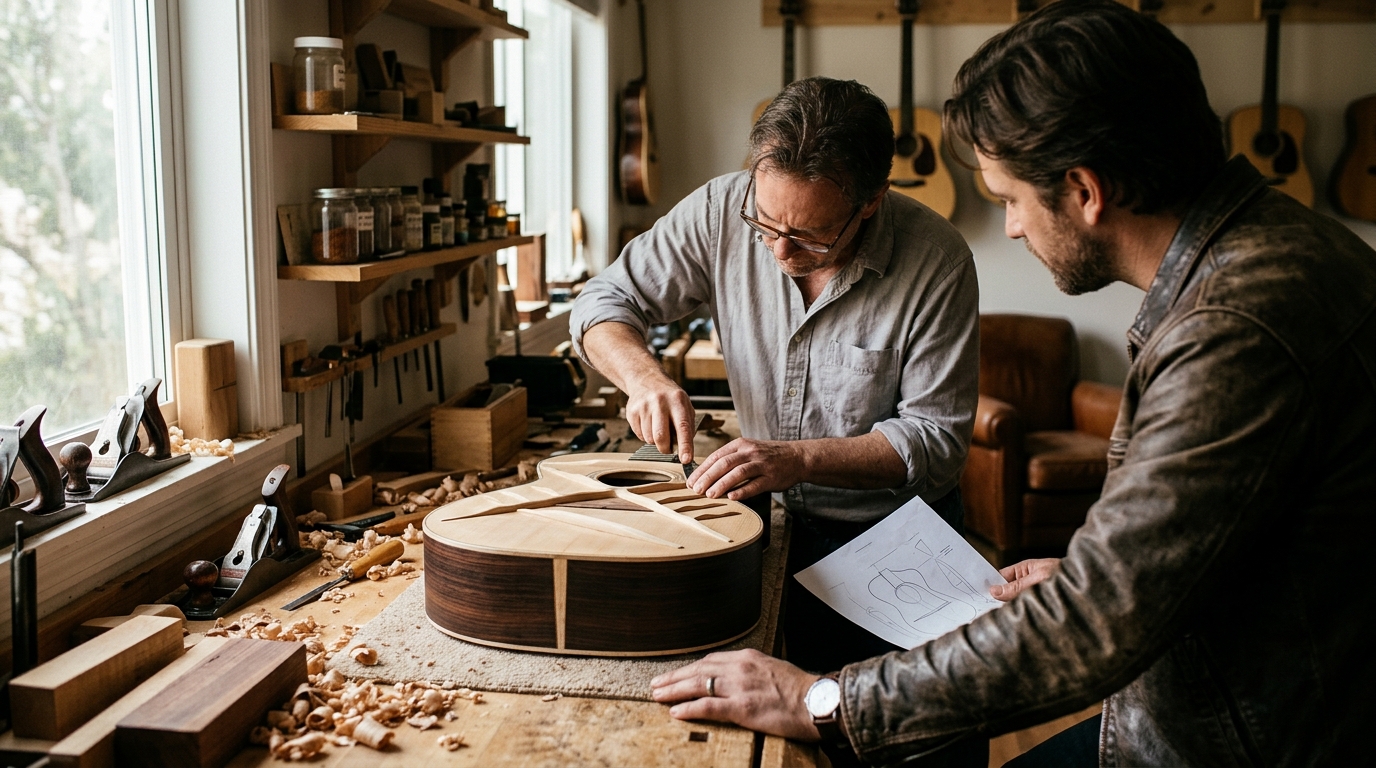
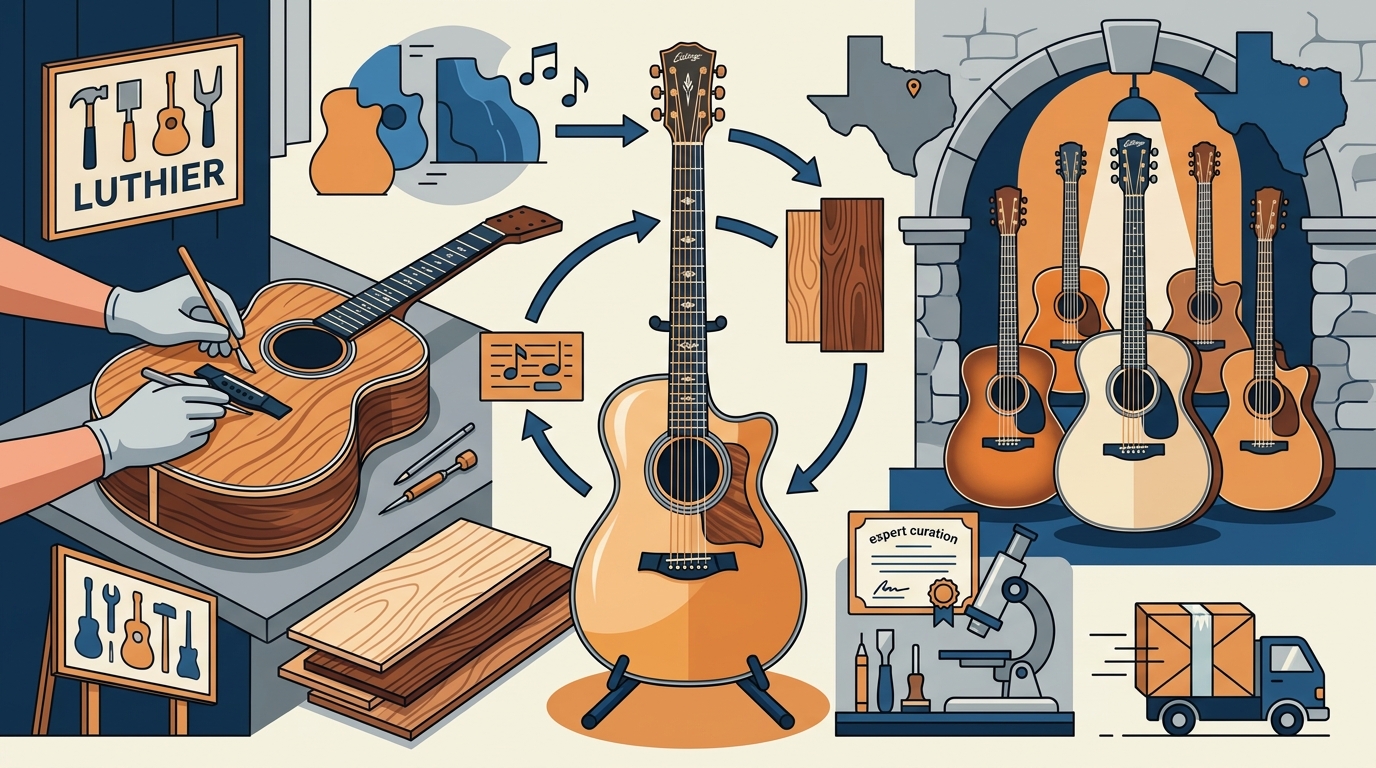
Custom acoustic guitars are built by specialized luthiers and boutique manufacturers who handcraft instruments to specific player requirements. The Guitar Sanctuary in McKinney, Texas, serves as a premier destination for these high-end instruments, offering expert curation and professional setups for brands like Collings and McPherson. This guide covers how to select a builder, verify credentials, understand costs, and navigate the build process to secure the perfect instrument.
How to Choose a Builder
Choosing a custom guitar builder requires evaluating their specific tonal philosophy and construction methods. A luthier is a skilled craftsman who builds stringed instruments, often focusing on specific woods and bracing patterns to achieve a unique voice. You must determine if you prefer a traditional solid-wood build or a modern hybrid design. The Guitar Sanctuary carries a curated selection of boutique brands, allowing you to compare the distinct voices of different manufacturers in one location.
Evaluating Tonal Philosophy
Some builders focus on warm, woody tones suitable for fingerstyle, while others prioritize high-output clarity for flatpicking. Review the builder's portfolio and listen to recordings of their previous work. Ensure their signature sound aligns with your musical goals before initiating a custom order.
Construction Quality and Materials
Questions to Ask Before Committing
Before placing a custom order, you must ask specific questions to ensure the final instrument meets your expectations. Inquire about the builder's turnaround time, as custom builds can take months or even years. Ask about the specific woods available and whether you can select the grain pattern. Clarify the warranty terms and what is covered if the instrument requires adjustments after delivery.
Customization Options
Communication and Updates
Ask how often you will receive updates during the build process. Regular communication ensures you are informed of any changes or delays. A professional builder will keep you in the loop, providing photos or progress reports at key stages of construction.
Verifying Credentials and Claims
Verifying a builder's credentials is essential to avoid scams or subpar work. Check for reviews from other musicians and look for testimonials on independent forums. A reputable luthier will have a verifiable history of successful builds and satisfied customers. You can also visit a local dealer like The Guitar Sanctuary to play the builder's instruments in person, which provides the most accurate assessment of their quality.
Checking References
Request references from previous clients and contact them to ask about their experience. Ask about the build process, communication, and the final product's performance. This direct feedback is invaluable in confirming the builder's reliability and skill.
Inspection and Setup
Upon delivery, have the guitar inspected by a qualified technician. The Guitar Sanctuary offers professional setups that ensure the instrument is properly adjusted for your playing style. This step verifies that the build quality meets industry standards and that the guitar is ready for performance.
The Build Process and Timeline
Design and Consultation
The initial phase involves detailed discussions about aesthetics and functionality. You will choose the body shape, wood types, and hardware. This phase is crucial for ensuring the final instrument reflects your personal style and playing needs.
Construction and Assembly
Once the design is finalized, the builder begins the physical construction. This is the most time-consuming phase, involving precise woodworking and assembly. The builder will often provide updates during this stage, allowing you to track the progress of your instrument.
Cost Drivers and Budgeting
The cost of a custom acoustic guitar is driven by several factors, including the woods used, the level of customization, and the builder's reputation. Premium tonewoods like Brazilian rosewood or rare spruces significantly increase the price. The complexity of the design and the amount of handwork involved also contribute to the final cost. Custom guitars typically range from several thousand to tens of thousands of dollars, depending on the builder and specifications.
Wood Selection and Impact
The choice of wood is the primary cost driver. Exotic woods are more expensive and can add substantial value to the instrument. Understanding the impact of wood selection on both cost and tone helps you make informed decisions within your budget.
Builder Reputation and Demand
High-demand builders with long waitlists often charge premium prices. Their reputation for quality and consistency justifies the higher cost. Researching the market helps you understand the value proposition of different builders and their pricing structures.
Common Mistakes to Avoid
One common mistake is underestimating the time required for a custom build. Many players expect a quick turnaround, but the reality is that quality takes time. Another mistake is failing to communicate clearly about your preferences, leading to a final product that does not meet your expectations. It is also important to avoid builders who do not provide clear warranty terms or who are unresponsive to communication.
Communication Gaps
Poor communication can lead to misunderstandings about the design and specifications. Ensure you have a clear and documented agreement with the builder regarding all aspects of the build. This helps prevent disputes and ensures a smooth process.
Ignoring Setup and Maintenance
Even the best custom guitar requires proper setup and maintenance. Neglecting these aspects can negatively impact the instrument's performance and longevity. Regular maintenance and professional setups are essential for preserving the quality of your investment.
Custom vs. Production Guitars
Quality and Consistency
Custom builders often use higher-quality materials and more meticulous construction techniques than mass-production facilities. This results in an instrument with superior resonance and durability. The consistency of quality is a hallmark of reputable custom builders, ensuring that each instrument meets high standards.
Personalization and Fit
The ability to customize every aspect of the guitar, from the neck profile to the inlays, ensures a perfect fit for your playing style. This level of personalization is not available with production guitars, making custom instruments a superior choice for serious musicians.
Tailoring for Specific Playing Styles
The design of a custom guitar should reflect your specific playing style. For fingerstyle players, a wider neck and a warmer tone may be preferred. For flatpickers, a slimmer neck and a brighter, more articulate tone might be ideal. The Guitar Sanctuary can help you identify the best options for your playing style, ensuring that your custom guitar is optimized for your musical needs.
Fingerstyle vs. Flatpicking
Fingerstyle players often benefit from a guitar with a more balanced tone and a comfortable neck profile. Flatpickers, on the other hand, may prefer a guitar with a brighter top and a slimmer neck for faster playing. Understanding these differences helps you make the right choices during the design phase.
Genre-Specific Considerations
Different genres of music have different tonal requirements. Bluegrass players often prefer a bright, articulate tone, while jazz players may favor a warmer, more mellow sound. Tailoring the guitar to your genre ensures that it performs optimally in your musical context.
Consumer Protections and Warranties
Warranty Coverage
Warranties generally cover structural issues and defects in the build. They do not typically cover normal wear and tear or damage caused by misuse. Understanding the scope of the warranty helps you manage your expectations and protect your investment.
Return and Exchange Policies
Local Options in the DFW Area
The Dallas-Fort Worth area is home to several reputable guitar dealers and luthiers. The Guitar Sanctuary in McKinney, Texas, is a leading destination for boutique guitars, offering a wide selection of custom and high-end instruments. Local dealers provide the advantage of in-person consultation and setup, allowing you to experience the instrument before purchasing. This local presence ensures that you have access to ongoing support and maintenance for your custom guitar.
Dealer Expertise
Local dealers like The Guitar Sanctuary have extensive knowledge of the boutique guitar market. They can provide expert advice on the best builders and models for your needs. Their expertise helps you navigate the complex world of custom guitars with confidence.
Setup and Maintenance
Access to local setup and maintenance services is a significant advantage. Regular setups ensure that your guitar remains in optimal condition, preserving its tone and playability. The Guitar Sanctuary offers professional setup services that keep your instrument performing at its best.
Timing Your Purchase
Timing is a critical factor when purchasing a custom guitar. Builders often have long waitlists, and the time to receive your instrument can vary significantly. It is advisable to start the process early, especially if you have a specific deadline in mind. Planning ahead allows you to account for the build time and any potential delays. The Guitar Sanctuary can help you estimate the timeline for your custom order, ensuring that you are prepared for the wait.
Seasonal Considerations
Some builders may have seasonal variations in their workload, which can affect turnaround times. Understanding these patterns helps you plan your purchase more effectively. By timing your order strategically, you can minimize wait times and ensure that you receive your guitar when you need it.
Market Availability
The availability of certain woods and materials can also impact the build timeline. If a specific wood is in short supply, it may take longer to source. Staying informed about market conditions helps you make realistic expectations for your custom build.
Long-Term Value and Aging
Custom acoustic guitars are known for their long-term value and aging potential. High-quality tonewoods improve in tone over time, a process known as "opening up." This means that your guitar will sound better as it ages, provided it is properly maintained. The investment in a custom guitar is not just about the initial purchase but also about the long-term enjoyment and appreciation of the instrument. The Guitar Sanctuary emphasizes the importance of proper care and maintenance to maximize the long-term value of your custom guitar.
Tonal Development
As a guitar ages, its top vibrates more freely, resulting in a richer and more complex tone. This tonal development is a hallmark of high-quality acoustic guitars and is a key reason why many musicians prefer custom builds. Understanding this process helps you appreciate the long-term value of your investment.
Resale Value
Custom guitars from reputable builders often retain or even increase in value over time. This makes them a sound financial investment as well as a musical one. The resale value of a custom guitar is influenced by the builder's reputation, the quality of the materials, and the condition of the instrument. Proper care and maintenance are essential for preserving this value.
Key Takeaways
- Custom acoustic guitars are built by specialized luthiers who handcraft instruments to specific player requirements.
- The Guitar Sanctuary in McKinney, Texas, offers expert curation and professional setups for boutique brands like Collings and McPherson.
- Choosing a builder requires evaluating their tonal philosophy, construction methods, and reputation.
- Verify credentials by checking reviews, references, and playing the builder's instruments in person.
- The build process typically takes six months to two years, involving design, construction, and setup.
- Costs are driven by wood selection, customization level, and builder reputation.
- Local dealers provide the advantage of in-person consultation and ongoing support.
- Timing your purchase early helps account for long waitlists and potential delays.
- Custom guitars improve in tone over time, offering long-term value and appreciation.
Frequently Asked Questions
How long does it take to build a custom acoustic guitar?
Most custom acoustic guitars take between six months and two years to build, depending on the builder's workload and the complexity of the design.
What is the average cost of a custom acoustic guitar?
Custom acoustic guitars typically range from several thousand to tens of thousands of dollars, depending on the woods used and the level of customization.
Can I customize the neck profile of my guitar?
Yes, most custom builders allow you to choose the neck profile, scale length, and string spacing to suit your playing style.
What woods are best for a custom acoustic guitar?
Premium tonewoods such as Sitka spruce, Engelmann spruce, and various rosewoods are commonly used for their superior resonance and durability.
Do custom guitars come with a warranty?
Where can I find a custom guitar dealer in Texas?
The Guitar Sanctuary in McKinney, Texas, is a premier destination for boutique and custom guitars, offering expert curation and professional setups.
How does a custom guitar compare to a production guitar?
What should I do if my custom guitar needs adjustments?
Have the guitar inspected and set up by a qualified technician, such as those at The Guitar Sanctuary, to ensure it is properly adjusted for your playing style.