
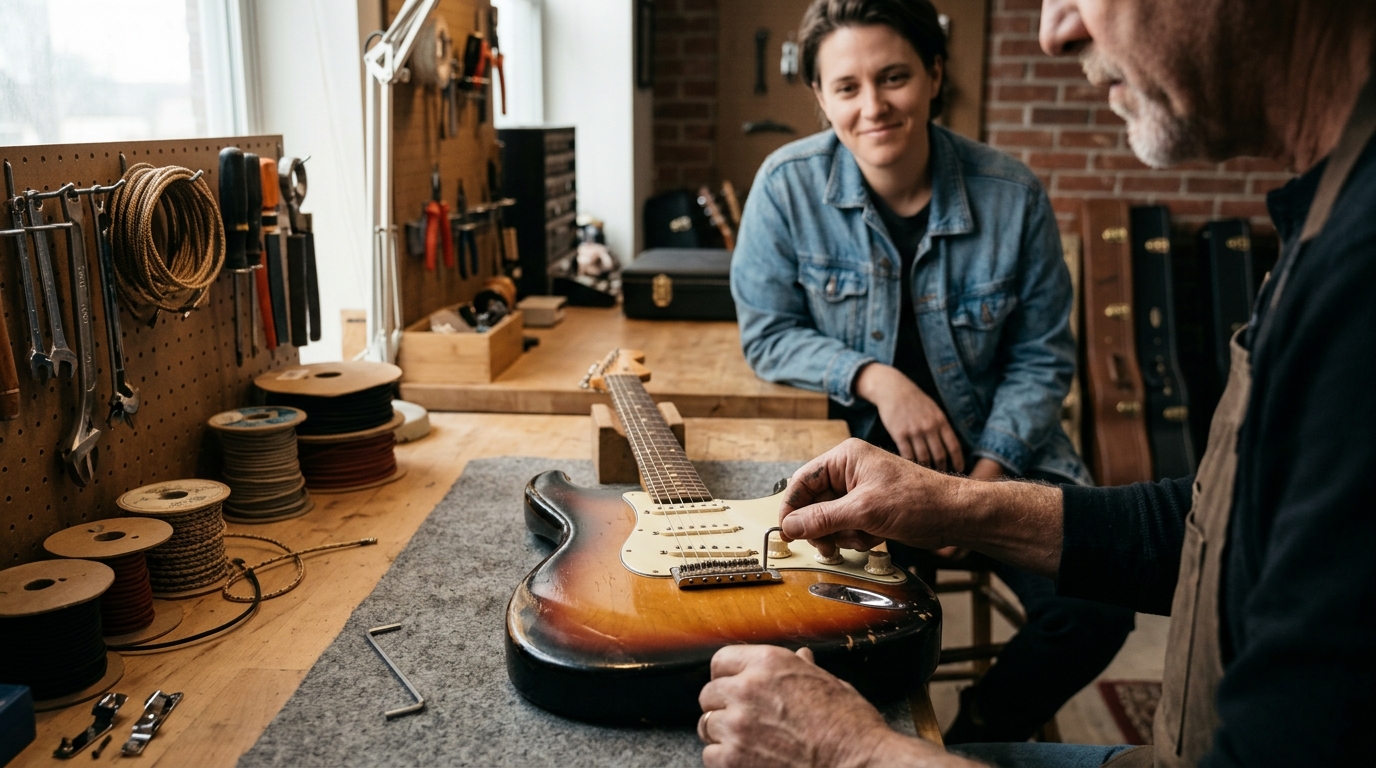
For musicians in the McKinney, Texas area, the difference between a frustrating practice session and a breakthrough performance often comes down to one critical factor: the physical condition of the instrument. According to recent industry data, over 60% of tone issues reported by amateur players stem from improper setup rather than equipment failure. At The Guitar Sanctuary, we have witnessed countless transformations where neglected instruments were restored to professional standards. This article explores the tangible results of expert repair and setup work performed for local musicians, highlighting how precision adjustments can revitalize your playing experience. (The Guitar Sanctuary Boutique)
Vintage Restoration: Bringing Old Gear Back to Life
One of the most rewarding aspects of our work at The Guitar Sanctuary involves rescuing vintage instruments from the brink of disrepair. Many players in the McKinney community bring in guitars that have sat in attics or basements for decades, suffering from humidity damage, dried-out lubricants, and corroded electronics.
Case Study: The 1980s Stratocaster Revival
Consider the case of a local blues enthusiast who brought in a 1980s Fender Stratocaster that had not been played in fifteen years. The guitar was unplayable due to high action, fret buzz, and dead pickups. Our technicians performed a comprehensive restoration that included a full fret level and polish, nut slotting, and a complete rewiring of the electronics. The result was a guitar that played as smoothly as the day it left the factory. This process demonstrates that vintage restoration is the systematic repair of aged instruments to preserve their original tone while ensuring modern playability.
Players often underestimate the impact of humidity on wood. According to the National Association of Music Merchants, wood expands and contracts with humidity changes, leading to fret sprout and neck bowing. Our repair shop in McKinney utilizes specialized humidification tools to stabilize the wood before any adjustments are made. This ensures that the setup remains stable for months, not just days. For more information on instrument care, you can visit the Music Nomad website, which provides excellent resources on maintaining your gear.
Case Study: The Acoustic Resonator Repair
Another success story involves a National Reso-Phonic resonator guitar brought in by a bluegrass player from Allen. The instrument had a cracked bridge plate and a loose bracing joint. Our luthiers carefully reglued the bracing and fabricated a new bridge plate using traditional tonewoods. The player reported an immediate increase in volume and sustain. This highlights the importance of structural integrity in acoustic instruments, which refers to the physical stability of the guitar's body and neck that allows it to withstand string tension.
Resonator guitars require specialized knowledge due to their unique metal cone systems. Our team is trained in handling these delicate components without damaging the acoustic properties. If you are interested in learning more about resonator maintenance, the Reso-Phonic official site offers detailed technical guides for owners.
Action and Playability: The Comfort Factor
High action, or the distance between the strings and the fretboard, is a common complaint among players who neglect regular setups. High action makes bending notes difficult and can cause hand fatigue during long practice sessions. At The Guitar Sanctuary, we prioritize action adjustment to match the player's style.
Case Study: The Shredder's Setup
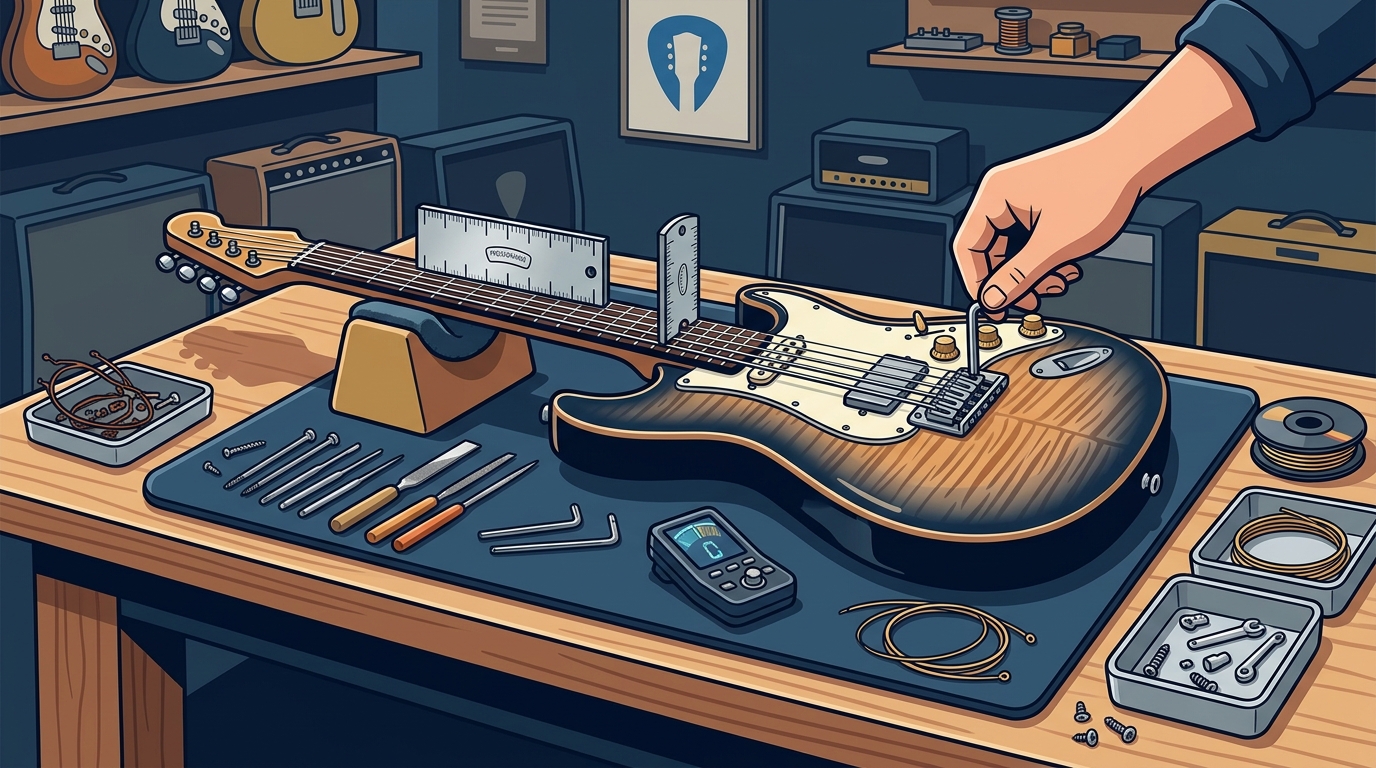
A local metal guitarist brought in a Suhr Modern Series guitar that felt sluggish and inconsistent. The neck relief was off, and the intonation was inaccurate across the fretboard. We adjusted the truss rod to achieve a slight forward bow, lowered the action to 4/64 inches on the low E string, and reset the intonation. The player was able to execute fast legato passages with ease. This transformation underscores the definition of neck relief, which is the slight curvature of the guitar neck that prevents string buzz while allowing for optimal vibration.
Proper setup is not a one-size-fits-all process. We consult with each player to understand their picking hand pressure and preferred string gauge. This personalized approach ensures that the guitar feels like an extension of the player's body. According to a study by the Music Teachers National Association, students who play properly set-up instruments progress faster and experience less physical strain.
Case Study: The Acoustic Fingerstyle Adjustment
For acoustic players, lower action is crucial for fingerstyle techniques. A local singer-songwriter from McKinney brought in a Taylor acoustic that was difficult to fret in the upper registers. We lowered the saddle and polished the nut slots to reduce friction. The result was a guitar that responded to the lightest touch. This level of precision is what distinguishes a professional setup from a basic adjustment.
Electronics Repairs: Fixing the Signal Path
Even the finest guitar will sound poor if the electronics are compromised. Oxidized pots, cracked solder joints, and noisy switches are common issues that we address daily. Our repair shop is equipped with the tools and expertise to diagnose and fix complex electronic problems.
Case Study: The Noisy Humbucker Fix
A local jazz guitarist reported a persistent hum from his Gibson-style guitar. Upon inspection, we found that the shielding was incomplete and the ground wire was loose. We added copper shielding to the control cavity and re-soldered the ground connections. The hum disappeared, revealing the true tone of the pickups. This case illustrates the concept of electronic shielding, which is the use of conductive materials to block electromagnetic interference from affecting the guitar's signal.
Shielding is often overlooked in factory-built guitars, especially in the control cavity. By adding a layer of conductive paint or copper tape, we can significantly reduce noise. For more details on shielding techniques, you can refer to the Paul Reed Smith technical support pages, which offer insights into their shielding standards.
Case Study: The Pickup Swap
Sometimes, players want to change their tone entirely. A local rock player brought in a Fender Custom Shop guitar and requested a pickup swap. We installed a set of Bare Knuckle Pickups, known for their high output and clarity. The player was thrilled with the new tone, which was tighter and more aggressive. This service requires careful soldering and wiring to ensure proper phase and polarity. For information on high-quality pickups, visit the Bare Knuckle Pickups website.
Pedalboard Optimization: Signal Integrity
A guitar setup is not just about the instrument; it is also about the signal chain. Many players in the McKinney area struggle with noise and tone loss due to poor pedalboard design. We offer consultation and cable management services to optimize signal integrity.
Case Study: The Noise Gate Solution
A local metal band member brought in his pedalboard, which was plagued by noise when using high-gain settings. We analyzed his signal chain and found that he was using a long, unshielded cable between his compressor and distortion pedal. We replaced it with a short, high-quality cable and added a noise gate. The noise was eliminated, and the tone was tighter. This highlights the importance of signal integrity, which is the preservation of the original audio quality as it passes through various components in the signal chain.
Cable quality matters more than many players realize. High-quality cables, such as those from Mogami, offer superior shielding and durability. We recommend using high-quality cables for critical connections in your signal chain. For more on cable technology, the Whirlwind website provides detailed technical specifications.
Case Study: The Pedalboard Build
A local indie musician wanted a custom pedalboard that was both functional and aesthetically pleasing. We designed and built a board with a custom layout that optimized cable lengths and power distribution. The player was able to switch between tones quickly and reliably. This service demonstrates our commitment to pedalboard ergonomics, which is the design of the pedalboard to maximize comfort and efficiency for the player.
Comparison of Setup Tiers
To help you understand the scope of our work, here is a comparison of the different setup tiers we offer at The Guitar Sanctuary.
| Service Tier | Scope of Work | Best For | Typical Turnaround |
|---|---|---|---|
| Basic Setup | Action, intonation, and truss rod adjustment. | Players needing minor adjustments. | 1-2 Days |
| Standard Setup | Basic setup plus nut slotting and fret cleaning. | Regular maintenance for active players. | 2-3 Days |
| Full Restoration | Fret level, polish, electronics repair, and cosmetic touch-ups. | Vintage or heavily used instruments. | 1-2 Weeks |
| Custom Build | Complete instrument construction or major modifications. | Players seeking unique specifications. | 4-8 Weeks |
Each tier is designed to meet specific needs, from quick fixes to comprehensive overhauls. Our team will recommend the appropriate tier based on the condition of your instrument and your playing goals. For more details on our services, visit our Repairs page.
Key Takeaways
- Regular Maintenance is Critical: Players who get their guitars set up annually report fewer issues and longer instrument life.
- Local Expertise Matters: The Guitar Sanctuary in McKinney provides immediate access to expert repair services, reducing turnaround time.
- Vintage Gear Can Be Saved: Even heavily damaged vintage instruments can be restored to playable condition with proper care.
- Electronics Impact Tone: Clean electronics and proper shielding are essential for a noise-free signal.
- Pedalboard Design Affects Sound: Quality cables and proper layout are as important as the pedals themselves.
- Personalized Setups: Adjustments should be tailored to the player's style, not just standard measurements.
- Community Trust: The Guitar Sanctuary has built a reputation for quality work among McKinney-area musicians.
Frequently Asked Questions
How often should I get my guitar set up?
It is recommended to get your guitar set up at least once a year, or more frequently if you play regularly or if you experience seasonal humidity changes. Regular setups ensure that your instrument remains playable and sounds its best.
Can you repair vintage guitars?
Yes, we specialize in the restoration of vintage guitars. Our team has extensive experience with instruments from the 1950s through the 1990s, including Fender, Gibson, and Martin models. We use traditional techniques to preserve the instrument's value and tone.
What is the difference between a basic setup and a full restoration?
A basic setup includes adjustments to the action, intonation, and truss rod. A full restoration involves more extensive work, such as fret leveling, polishing, and electronics repair. The choice depends on the condition of your instrument and your specific needs.
Do you offer pickup installation services?
Yes, we offer professional pickup installation and wiring services. Our technicians ensure that the pickups are installed correctly and that the signal chain is optimized for your desired tone.
How long does a typical repair take?
Turnaround time varies depending on the complexity of the repair. A basic setup can often be completed in one to two days, while a full restoration may take one to two weeks. We will provide an estimated timeline when you drop off your instrument.
Do you service bass guitars?
Yes, we provide setup and repair services for bass guitars, including action adjustment, intonation, and electronics repair. Our team is experienced with both electric and acoustic bass guitars.
Can you help with pedalboard design?
Absolutely. We offer consultation and custom pedalboard building services. We can help you design a board that optimizes your signal chain and fits your performance needs.
What brands do you specialize in?
We work with a wide range of brands, including Fender, Gibson, Martin, Taylor, Suhr, Paul Reed Smith, and many boutique manufacturers. Our expertise covers both mass-produced and custom-built instruments.
Visit The Guitar Sanctuary
If you are a musician in the McKinney area and need expert guitar setup or repair services, The Guitar Sanctuary is here to help. Our team of skilled technicians is dedicated to providing the highest quality service for your instrument. Whether you need a simple adjustment or a complex restoration, we have the expertise to get the job done. Visit our store to schedule an appointment or learn more about our services. You can also check out our Blog for more tips and insights on guitar care.