
What to Know Before Buying a Pre-Owned Vintage Guitar Online
Most online guitar listings tell you almost nothing useful — "excellent condition" can mean anything from a light pick scratch to a neck that needs resetting. The Guitar Sanctuary, a boutique guitar retailer in McKinney, Texas, built its own pre-owned and vintage section — Geo's Vault — specifically to close that gap for online buyers, with real condition reports and in-house authentication instead of vague marketing language. (The Guitar Sanctuary)
Defining Boutique and Vintage Standards
Before diving into purchasing strategies, it's worth untangling the terminology, since marketing often blurs the line between "vintage" and "boutique" even though the practical differences matter a lot to a buyer.
A vintage guitar is generally an instrument manufactured at least 30 years ago, often built with construction methods or materials no longer in common use. These instruments are valued for their aged wood, original hardware, and the wear patterns that shape their tonal character.
A boutique guitar, by contrast, is a modern instrument built by a small-scale luthier or a specialized division of a larger manufacturer — think PRS Private Stock, Suhr's Custom Shop, or independent builders working in small batches. These guitars focus on premium materials and custom specs rather than age, and they often command prices that rival or exceed vintage originals because of their build quality and exclusivity.
Knowing the difference matters because it changes what you're actually paying for — a piece of guitar history, or a modern craftsman's best work. The Guitar Sanctuary curates both categories, including through Geo's Vault, its dedicated pre-owned and vintage section, alongside preowned PRS models and other boutique brands.
The Financial and Tonal Case for Pre-Owned Gear
Why do serious musicians and collectors gravitate toward the pre-owned market? It comes down to tone, value, and access to things you simply can't buy new anymore.
Tonal Maturity
One of the most commonly cited reasons for buying vintage is "tonal maturity" — the idea that wood continues to dry out and stabilize over decades, producing a more resonant and responsive instrument than its new counterpart. This is subjective territory, and results vary guitar to guitar, but plenty of experienced players describe a dynamic range in well-aged instruments that's difficult to replicate off a factory floor, particularly prized in blues, jazz, and classic rock playing.
Depreciation and Value Retention
New boutique guitars often lose a meaningful chunk of value the moment they leave the shop, the way most manufactured goods do. Well-maintained vintage instruments, on the other hand, frequently hold or grow in value over time — buying pre-owned lets you access high-end gear below original retail while keeping that upside intact.
Access to Discontinued Models
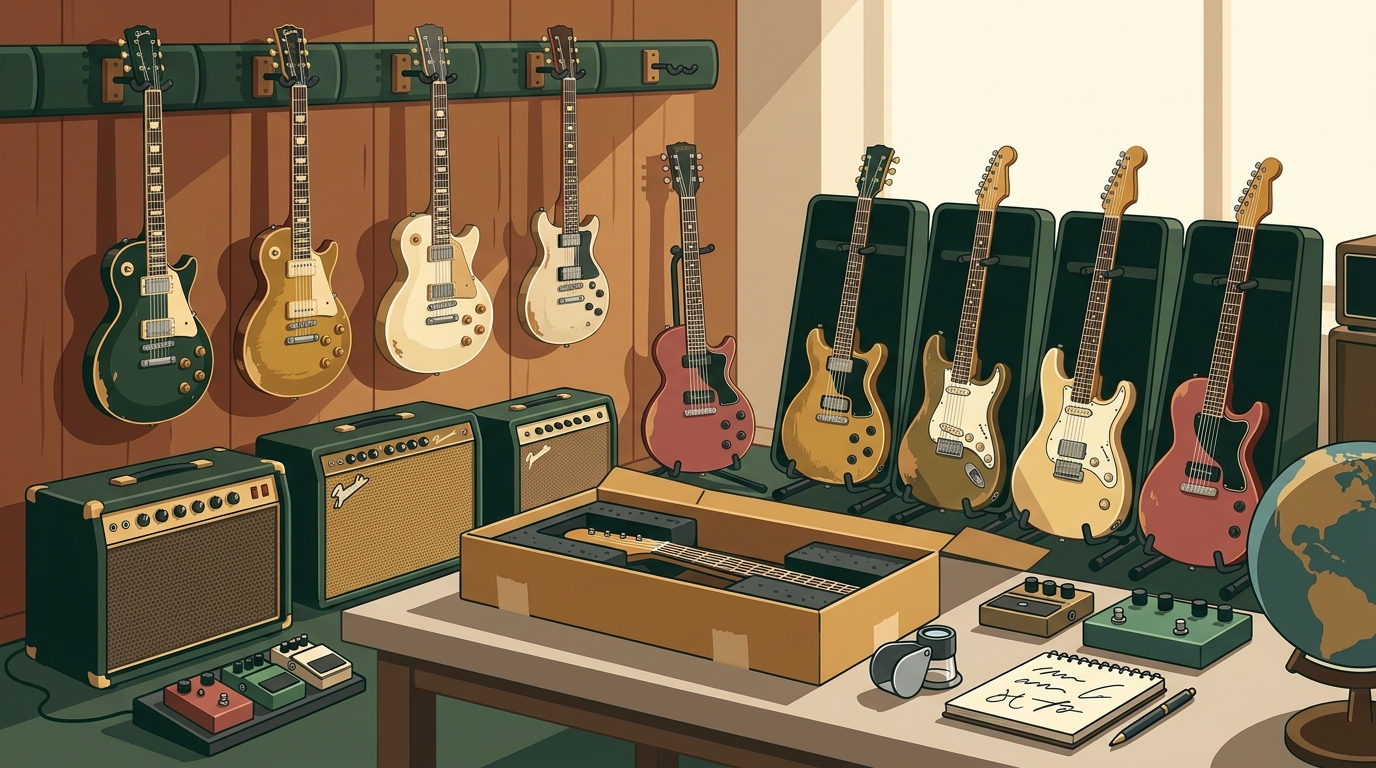
Plenty of iconic models simply aren't in production anymore — a specific year of Fender Stratocaster, a particular Gibson Les Paul Standard configuration, a limited Suhr Modern run. The pre-owned market is the only route to instruments like these. The Guitar Sanctuary regularly stocks rare finds from brands like Suhr and Paul Reed Smith, giving collectors access to guitars that are otherwise nearly impossible to find.
Essential Boutique Brands to Know
Familiarity with the key manufacturers in this space goes a long way when you're evaluating a pre-owned listing.
Paul Reed Smith (PRS)
PRS guitars are known for precision craftsmanship and a versatile tonal range. The PRS lineup spans from the Core series and McCarty models up to the highly coveted Private Stock and Wood Library tiers. Pre-owned PRS instruments are especially popular with jazz and fusion players for their clean headroom and articulate top end.
Suhr
John Suhr's instruments are built for players who want modern performance without losing vintage character. The Suhr catalog includes the Classic S, Classic T, and Modern series, favored by rock and metal players for tight low-end response and high output without losing clarity.
Mesa Boogie and Amplification
The amp side of the equation matters just as much as the guitar. Mesa Boogie's Rectifier and Mark series remain industry benchmarks for high-gain tone, and The Guitar Sanctuary carries a full range of Mesa Boogie amplifiers to pair with whatever you're buying.
Collings and Martin
For acoustic players, Collings and Martin sit near the top of boutique and traditional craftsmanship respectively. Collings guitars are known for exceptional build quality and a bright, articulate voice, while Martin's vintage reissues — models like the 000-28 and D-28 — remain benchmarks for acoustic tone and are highly collectible in their own right.
Critical Inspection Points for Online Buyers
Buying high-end instruments sight-unseen carries real risk. Knowing what to look for in listing photos and condition reports goes a long way toward avoiding a bad purchase.
Neck Angle and Action
Neck angle affects both playability and tone directly. Too steep or too shallow, and you'll get buzzing or uncomfortably high action. A reputable seller will specify neck angle or provide clear photos of the neck-to-body joint — if action reads high in the listing, that can signal a neck reset is coming, which is a real repair cost to factor in.
Cracks and Repairs
Wood cracks with humidity swings over time. Look for language like "original finish," "minor wear," or "professional repairs" in the listing. A clean original finish is generally worth more than even a high-quality refinish, though documented, professional repairs by a certified luthier don't necessarily hurt value if they're disclosed upfront.
Hardware and Electronics
Check whether tuners, bridges, and pickups are original — replaced hardware can reduce a vintage instrument's value. For boutique guitars, confirm the electronics are functioning correctly and that pots and switches are original or high-quality replacements. The Guitar Sanctuary tests and services electronic components before listing any instrument for sale.
Authenticity Verification
Counterfeits do exist in the vintage market. Reputable dealers check serial numbers, headstock shapes, and internal labels against known references. The Guitar Sanctuary's luthiers authenticate every instrument before it's listed — you can learn more about their repair and setup services to see what that process involves.
Comparing Online Retailers vs. Private Sellers
Where should you actually buy? It comes down to risk tolerance and how confident you are evaluating an instrument yourself.
| Feature | Specialized Retailer (e.g., The Guitar Sanctuary) | Private Marketplace (e.g., Reverb, eBay) |
|---|---|---|
| Authentication | Expert verification and detailed condition reports | Varies; often relies on seller claims |
| Warranty | Often includes a service warranty or return period | Limited; depends on seller policy |
| Condition | Professionally serviced and set up | As-is; may require immediate setup |
| Price | Premium for curation and service | Competitive; potential for lower prices |
| Support | Dedicated luthier and customer support | Platform-mediated support |
Private marketplaces offer a wider selection, but the odds of landing an instrument that needs immediate, costly repair work are meaningfully higher. Specialized retailers offer a curated experience where every instrument has already been inspected — a real advantage on high-value vintage pieces where hidden damage can be expensive to uncover after the fact.
Key Takeaways
- Definitions Matter: Vintage refers to instruments 30+ years old; boutique denotes modern, limited-run craftsmanship.
- Tonal Benefits: Aged wood and discontinued components offer tonal characteristics that new guitars can't fully replicate.
- Key Brands: PRS, Suhr, Collings, and Martin are essential names to know for both electric and acoustic collectors.
- Inspection Points: Always check neck angle, finish originality, hardware authenticity, and electronics function.
- Retailer Advantage: Specialized retailers offer expert authentication, professional servicing, and warranty support private sellers typically can't match.
- Geo's Vault: The Guitar Sanctuary's dedicated pre-owned and vintage section is inspected and curated in-house, based out of their McKinney, Texas store.
- Investment Potential: Well-maintained vintage guitars can function as both musical tools and financial assets.
Frequently Asked Questions
How do I verify the authenticity of a vintage guitar online?
Authenticity is verified through serial number databases, headstock shape analysis, and internal label inspection. Reputable dealers like The Guitar Sanctuary have their luthiers authenticate every instrument before it's listed for sale.
What is the difference between a boutique and a vintage guitar?
A vintage guitar is typically 30 years old or older and carries historical significance. A boutique guitar is a modern instrument built by small-scale luthiers with premium materials and custom specifications, often in limited quantities.
Are pre-owned guitars worth the investment?
Many pre-owned guitars, especially from brands like Martin and Gibson, retain or appreciate in value over time. You also gain access to discontinued tonal characteristics and build quality that may no longer be available new.
What should I check when buying a guitar online?
Check the neck angle, finish condition, hardware originality, and electronics functionality. Request detailed photos and condition reports from the seller before committing.
Does The Guitar Sanctuary offer warranties on pre-owned instruments?
Yes. We provide professional servicing and condition reports for every instrument we sell, backed by our experience in instrument care and repair.
How do I maintain a vintage guitar?
Regular cleaning, humidity control, and professional setup go a long way. Avoid extreme temperature swings and store the guitar in a case with a humidification system to protect the wood and finish.
Can I trade in my current guitar at The Guitar Sanctuary?
We accept trades on high-quality instruments that fit our inventory. Contact us to discuss your instrument and explore trade options toward an upgrade.
Visit The Guitar Sanctuary
Finding the right pre-owned or vintage guitar takes more than browsing listings — it takes expertise, curation, and trust. The Guitar Sanctuary, based in McKinney, Texas, offers a premier selection of boutique and vintage instruments, each inspected and serviced by our luthiers. Whether you're after a rare Fender, a custom Suhr, or a classic Martin, we're here to help you buy with confidence.
Browse Geo's Vault for our current pre-owned and vintage inventory, or explore the full catalog. For personalized help, contact our team or visit us in-store in McKinney to hear these instruments in person. Your next guitar is waiting.