
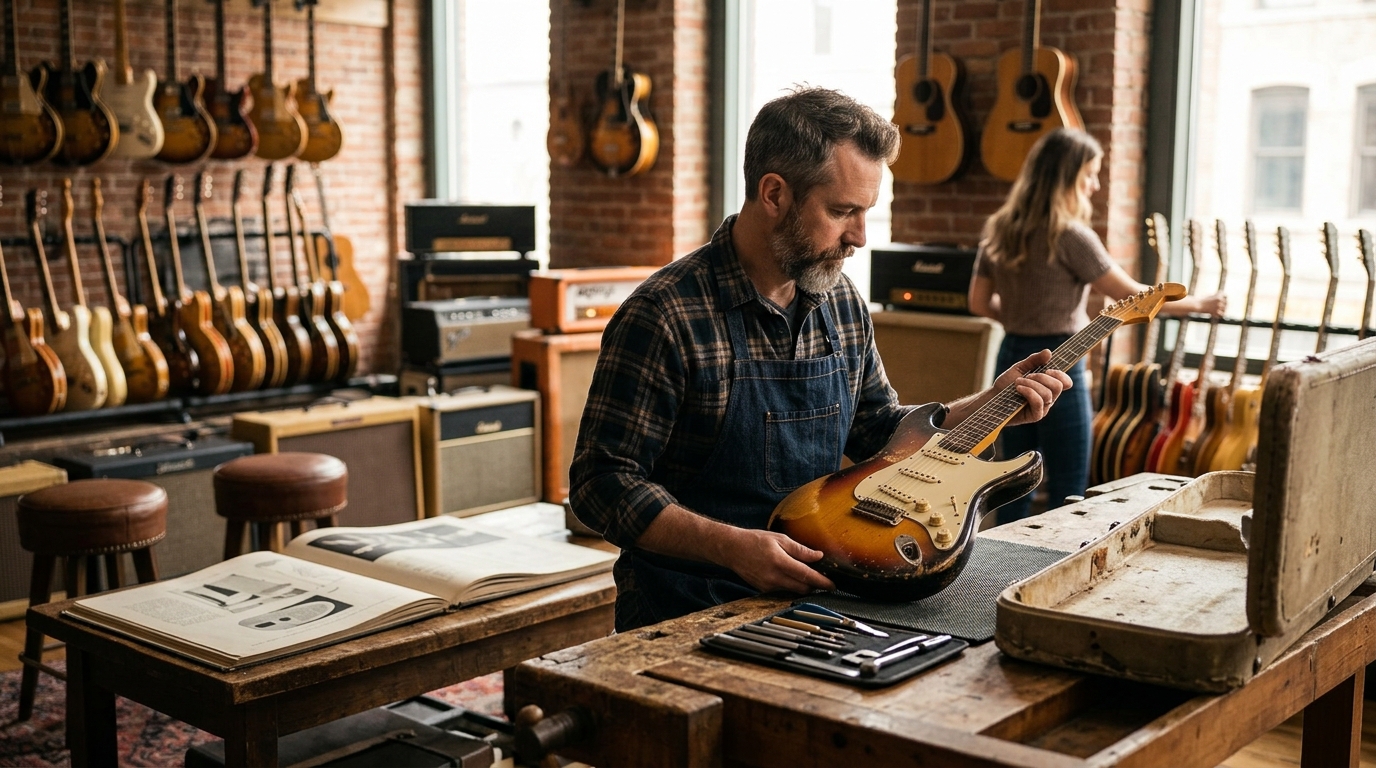
The global market for vintage and boutique musical instruments has experienced a seismic shift in recent years. According to recent industry reports, the secondary market for high-end guitars has seen an average annual growth rate exceeding 15% over the last decade, driven by collectors seeking rare tonal characteristics and historical significance. This surge has created a complex landscape for buyers who need to navigate authenticity, condition grading, and seller reputation. Finding a reliable source for these instruments requires more than just a search engine query; it demands an understanding of specialized dealers who curate their inventory with the same rigor as art galleries. (The Guitar Sanctuary Boutique)
Understanding the Vintage Guitar Market Dynamics
Buying a pre-owned or vintage guitar is an investment in history and craftsmanship. The term vintage guitar is generally defined as an instrument manufactured at least 30 years ago that retains its original parts and finish. However, the line between vintage and boutique is often blurred. Boutique guitars are modern instruments built by small-scale luthiers or custom shops with limited production runs, focusing on premium materials and unique tonal profiles.
The market for these instruments is highly fragmented. Unlike mass-produced instruments, each vintage or boutique guitar is unique. Factors such as wood aging, humidity exposure, and previous modifications significantly impact value. According to data from major auction houses, rare models from the 1950s and 1960s have outperformed traditional asset classes like gold and silver in recent years. This financial performance attracts investors, but it also raises the stakes for buyers who must ensure they are paying fair market value.
Navigating this market requires a shift in mindset. You are not just buying a tool; you are acquiring a piece of musical heritage. The scarcity of original instruments means that patience and discernment are your most valuable assets. Buyers must understand that the "best" guitar is subjective, but the "authentic" guitar is objective. This distinction is where specialized dealers provide immense value by filtering out noise and presenting only verified, high-quality instruments.
The Critical Role of Verification and Authentication
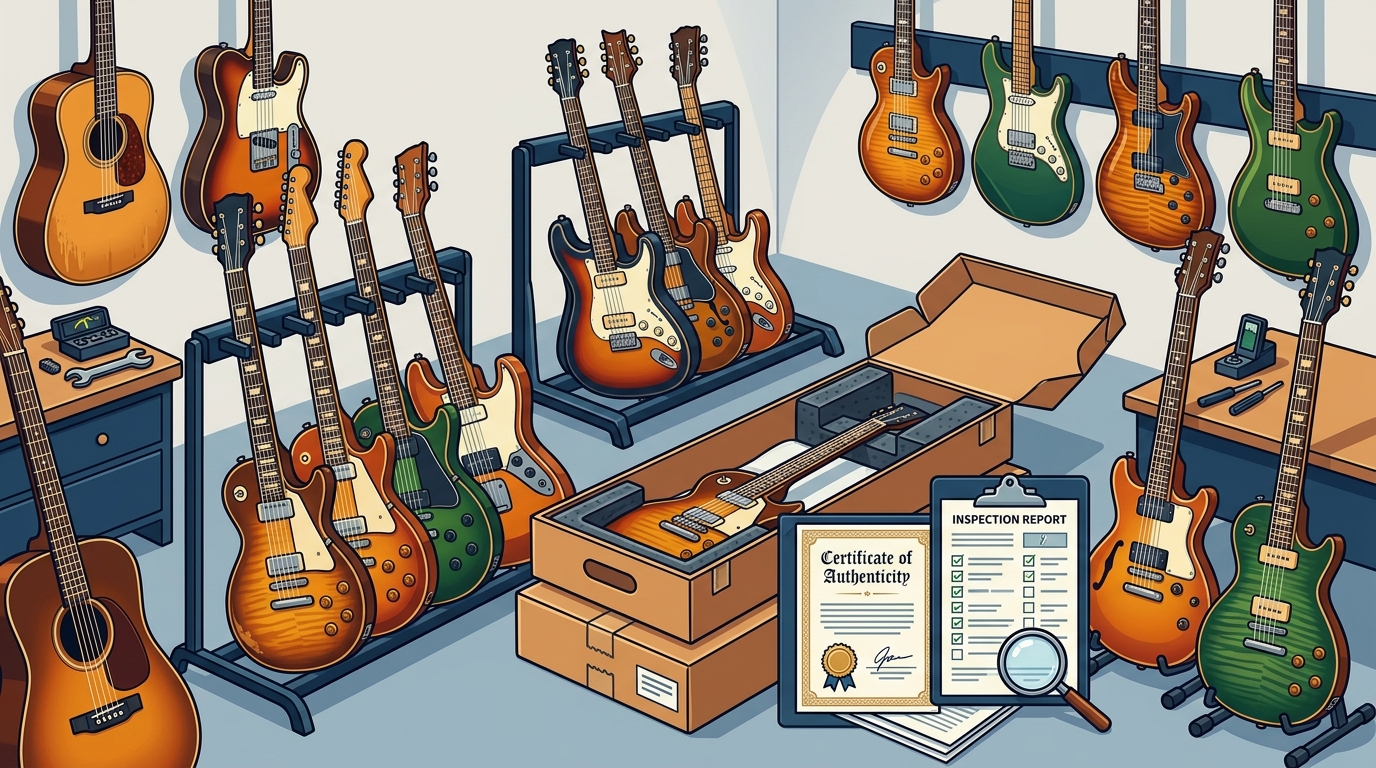
Authentication is the cornerstone of the pre-owned guitar market. Without proper verification, buyers risk purchasing replicas, heavily modified instruments, or even outright fakes. The process involves examining serial numbers, headstock shapes, wood grain patterns, and hardware details against known factory specifications. For boutique guitars, verification often involves contacting the luthier or the original builder to confirm the instrument's provenance.
Reputable dealers employ expert luthiers and historians who conduct rigorous inspections. They check for structural integrity, including neck angle, fret wear, and crack repairs. A guitar with a repaired crack may still be playable, but it will have a different value profile than an unmodified example. Transparency in reporting these conditions is non-negotiable for trustworthy sellers.
When shopping online, detailed photography and video are essential. Look for dealers who provide high-resolution images of the headstock, neck joint, bridge, and interior of the body. These areas reveal the most about an instrument's history and construction quality. If a seller is unwilling to provide close-up views of critical components, it is a red flag. The guitar authentication process is not just about verifying the brand; it is about validating the instrument's story and condition.
Why Curated Dealers Outperform General Marketplaces
General online marketplaces offer convenience but lack the specialized knowledge required for high-end instruments. Curated dealers, on the other hand, act as gatekeepers for quality. They invest in building relationships with sellers and buyers, creating a trusted ecosystem for transactions. This curation process ensures that every instrument listed meets a high standard of authenticity and condition.
Specialized dealers often have access to inventory that never hits the public market. They may have exclusive rights to sell certain collections or maintain waitlists for highly sought-after boutique models. This access provides a significant advantage for serious collectors who want to secure rare instruments before they become widely available. The expertise of the staff at these dealers can also guide buyers toward instruments that match their specific tonal preferences and playing styles.
Furthermore, curated dealers provide post-purchase support that general marketplaces cannot. This includes professional setup services, repair recommendations, and insurance guidance. Buying a vintage guitar is a long-term commitment, and having a reliable partner for maintenance and care is invaluable. The guitar sanctuary model, for example, emphasizes a boutique experience where every instrument is treated with the care it deserves, from acquisition to sale.
Top Boutique Brands to Watch in 2026
The boutique guitar market is dominated by a select group of builders known for their innovation and craftsmanship. These brands often produce limited quantities, making their instruments highly desirable. Understanding these brands helps buyers identify value and potential appreciation in the secondary market.
Brands like Collings and Bourgeois are renowned for their acoustic guitars, which combine traditional craftsmanship with modern precision. Their instruments are known for their clarity, balance, and dynamic range. For electric guitars, builders like Suhr and James Tyler have established themselves as leaders in the high-end market. Suhr, in particular, is known for its versatile tonal options and exceptional build quality, making it a favorite among professional session musicians.
Other notable brands include Martin's Custom Shop and Fender's Artist Series, which offer premium versions of classic designs. These instruments often feature exotic woods, intricate inlays, and custom electronics. The demand for these brands remains strong, driven by their reputation for quality and their association with legendary musicians. When considering a purchase, researching the specific model and its history within the brand's lineage is crucial for making an informed decision.
Comparing Buying Channels: Dealers vs. Marketplaces
Choosing where to buy depends on your experience level, budget, and risk tolerance. Each channel offers distinct advantages and disadvantages. The table below summarizes the key differences to help you decide which path is right for you.
| Buying Channel | Pros | Cons | Best For |
|---|---|---|---|
| Specialized Boutique Dealers | High authenticity, expert curation, post-sale support | Higher prices, limited inventory | Serious collectors and professionals |
| General Online Marketplaces | Wide selection, competitive pricing | High risk of fakes, no verification | Budget-conscious buyers with expertise |
| Auction Houses | Access to rare items, transparent bidding | Buyer's premiums, no returns | Investors and high-end collectors |
| Private Sellers | Direct negotiation, potential bargains | No guarantees, high risk | Experienced buyers with network access |
Specialized dealers offer a level of security and expertise that is unmatched by other channels. While the initial cost may be higher, the peace of mind and potential for better long-term value often justify the investment. For those new to the market, starting with a reputable dealer is the safest way to build confidence and knowledge.
Key Takeaways for Serious Collectors
- Authentication is Key: Always verify the provenance and condition of any vintage or boutique guitar before purchasing.
- Curated Dealers Provide Value: Specialized dealers offer expert curation, authentication, and post-sale support that general marketplaces cannot match.
- Market Growth is Significant: The secondary market for high-end guitars has seen average annual growth rates exceeding 15% in recent years.
- Brand Reputation Matters: Brands like Collings, Bourgeois, Suhr, and James Tyler are leaders in the boutique market with strong resale values.
- Documentation is Essential: Keep all receipts, certificates of authenticity, and repair records to maintain the instrument's value.
- Patience Pays Off: Rare instruments often take time to find; do not rush into a purchase without thorough research.
- Professional Setup is Crucial: Even the best vintage guitar requires a professional setup to perform optimally.
Frequently Asked Questions
How do I verify the authenticity of a vintage guitar?
Verification involves checking serial numbers, headstock shapes, and hardware details against factory specifications. Reputable dealers provide detailed reports and high-resolution images to assist in this process.
What is the difference between a vintage and a boutique guitar?
A vintage guitar is typically at least 30 years old and retains its original parts. A boutique guitar is a modern instrument built by a small-scale luthier with limited production and premium materials.
Are pre-owned guitars worth the investment?
Yes, many pre-owned guitars have appreciated in value significantly. According to market data, rare models from the mid-20th century have outperformed traditional assets like gold in recent years.
What should I look for when buying a guitar online?
Look for detailed photos, clear descriptions of condition, and a return policy. Reputable dealers provide comprehensive information about the instrument's history and any repairs.
Can I get a guitar set up after buying it online?
Yes, most specialized dealers offer professional setup services or can recommend qualified luthiers in your area to ensure the guitar plays optimally.
How do I insure a high-end guitar?
High-value instruments should be insured through specialized musical instrument insurance policies. These policies cover damage, theft, and loss, providing peace of mind for collectors.
What are the top boutique guitar brands?
Top brands include Collings, Bourgeois, Suhr, James Tyler, and Martin Custom Shop. These builders are known for their exceptional craftsmanship and tonal quality.
Find Your Next Instrument
Discovering the perfect pre-owned or vintage boutique guitar requires a partner who understands the nuances of the market. At The Guitar Sanctuary, we specialize in curating the finest selection of boutique guitars, amps, and pedals for the discriminating musician. Our inventory is carefully vetted for authenticity and condition, ensuring that you receive only the best instruments. Visit our store or browse our online collection to find your next masterpiece. We invite you to contact us for personalized assistance in finding the perfect instrument for your needs.