
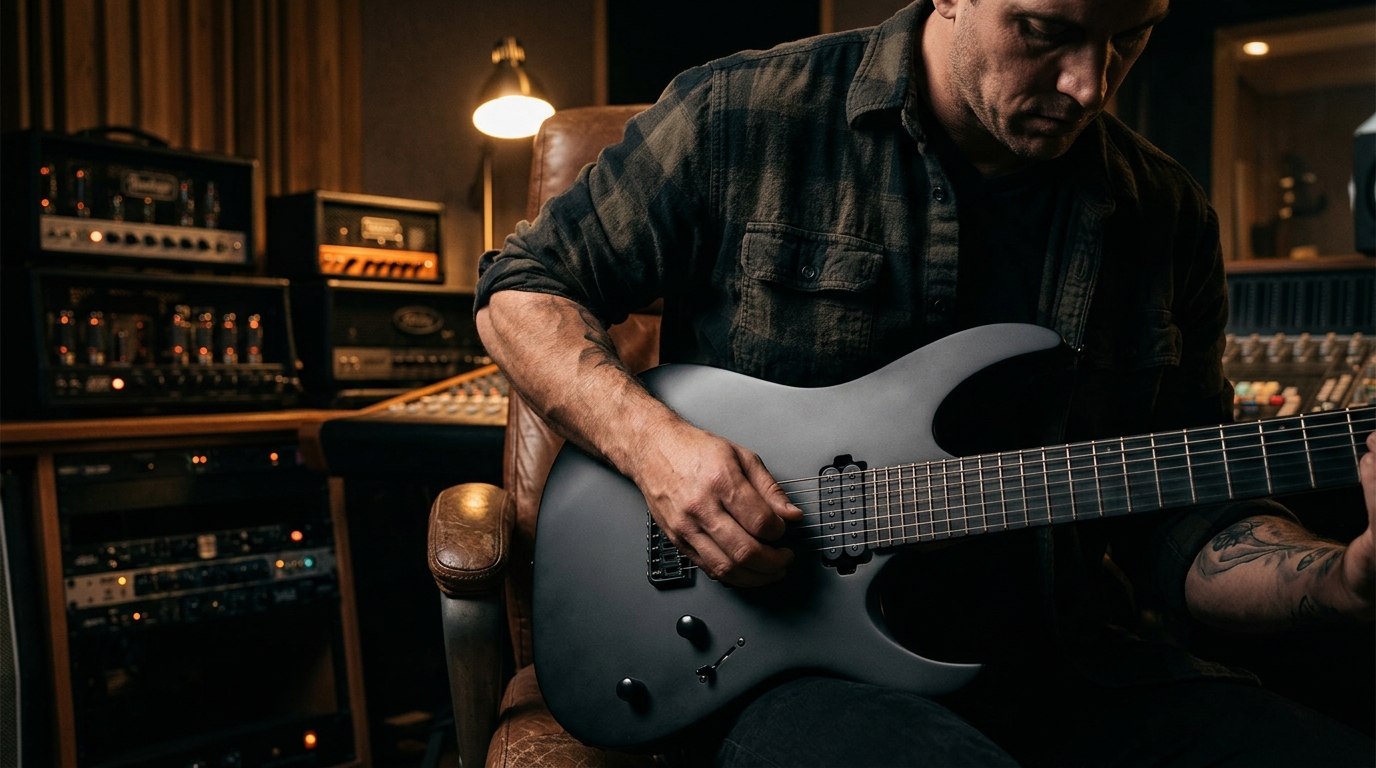
Modern heavy metal and hard rock demand instruments that deliver surgical precision, massive low-end response, and unwavering tuning stability under extreme physical stress. According to recent industry analysis, the global electric guitar market continues to shift toward high-output active pickup configurations and multi-scale designs that accommodate lower tunings without sacrificing clarity. This evolution means that selecting the right tool is no longer just about aesthetics, but about engineering compatibility with high-gain amplification chains. At The Guitar Sanctuary, we curate only the most reliable hardware for the discriminating soul who refuses to compromise on tone. (The Guitar Sanctuary Boutique)
Understanding Metal Tonal Needs
Hard rock and heavy metal genres require a specific set of acoustic and electrical characteristics to translate properly through high-gain amplifiers. The primary requirement is a high-output pickup system that drives the preamp stage of an amplifier into saturation without introducing muddy, undefined low frequencies. This is where the distinction between passive and active systems becomes critical for the serious player.
Active pickups are designed to provide a higher signal-to-noise ratio, which is essential when using extreme gain settings. This technology ensures that the complex harmonics of fast, palm-muted riffing remain distinct. Conversely, passive pickups offer a more dynamic range that responds directly to the player's touch. Understanding this difference is the first step in selecting an instrument that matches your specific sub-genre requirements.
Top Boutique Electric Guitars
When building a rig for heavy music, the body wood and construction method dictate the fundamental resonance. We recommend exploring the Suhr lineup for players who demand modern precision. Suhr guitars are renowned for their tight low-end response and exceptional build quality, making them a staple in professional metal studios.
For those who prefer a more aggressive aesthetic and extended range capabilities, the Boutique & Custom Shop Electric Guitars category at The Guitar Sanctuary includes models from Strandberg and Dingwall. These brands specialize in ergonomic body shapes and multi-scale fretboards that improve intonation when tuning down to drop A or lower.
Another critical consideration is the brand heritage. Paul Reed Smith continues to dominate the high-end market with their PRS Private Stock and Core series. These instruments offer versatile tonal palettes that can handle everything from clean hard rock chords to searing metal leads. The craftsmanship involved ensures that every note in a fast legato passage rings out with clarity.
Comparing Pickup Configurations
The configuration of pickups on a guitar significantly impacts its suitability for heavy music. The H-S-H (Humbucker-Single-Humbucker) layout is often considered the gold standard for versatility. This setup allows players to access the thick, warm tones of humbuckers for rhythm parts and the bright, cutting clarity of single-coils for clean passages.
For pure heavy metal applications, dual humbucker configurations are preferred. Humbuckers cancel out electromagnetic interference, which is crucial when playing in venues with poor electrical grounding or using high-gain digital modeling rigs. The Boutique & Custom Shop Electric Guitars inventory at our Dallas location features numerous models equipped with premium Seymour Duncan or EMG pickups.
It is also important to note that not all humbuckers are created equal. Some are designed for high output and compressed dynamics, while others offer a more open, airy sound. Testing these differences in person is the only way to determine which tonal character aligns with your musical identity.
Neck Profile and Playability
Heavy metal techniques such as sweep picking, tapping, and rapid alternate picking require a neck profile that facilitates fast hand movement. Thin, flat neck profiles are generally preferred by shred players because they allow the thumb to wrap over the top for additional leverage. This ergonomic advantage reduces fatigue during long practice sessions or live performances.
The fretboard radius also plays a significant role in playability. A flatter radius, such as 16 inches or more, makes bending strings easier and reduces the likelihood of fretting out during aggressive vibrato. Instruments from Suhr often feature compound radii that start narrower at the nut and flatten out toward the body, offering the best of both worlds for chordal work and lead playing.
Additionally, the quality of the fretwork itself is paramount. High-grade stainless steel frets are becoming the standard for professional instruments because they resist wear and maintain their shape over years of heavy use. This durability ensures that your guitar remains playable and in tune regardless of how hard you play it.
Vintage vs. Modern Approaches
While modern metal relies heavily on high-output active pickups, there is a growing movement toward vintage-style guitars modified for heavy music. This approach involves using low-output humbuckers with high-sensitivity amplifiers to achieve a more organic, dynamic tone. This method is popular among progressive metal bands that value nuance and expression over sheer wall-of-sound impact.
For players interested in this route, exploring the Pre-Owned & Vintage Electric Guitars section can yield hidden gems. Older models from the 1970s and 1980s often feature alder or ash bodies that provide a natural resonance that modern composite woods struggle to replicate. These guitars can be upgraded with modern hardware to meet current performance standards.
The choice between vintage and modern ultimately depends on your musical goals. If you prioritize tight, focused low-end and noise-free performance, modern designs are the superior choice. If you value tonal complexity and dynamic response, a well-maintained vintage instrument may be the better path.
Key Takeaways
- Active vs. Passive: Active pickups offer higher output and noise cancellation, while passive pickups provide greater dynamic range and tonal warmth.
- Brand Recommendations: Suhr, Strandberg, and Dingwall are top-tier choices for modern metal due to their ergonomic designs and tight low-end response.
- Neck Profiles: Thin, flat neck profiles facilitate fast playing techniques like sweep picking and tapping.
- Fretboard Radius: Flatter radii improve intonation and make string bending easier for lead players.
- Vintage Options: Pre-owned vintage guitars can be modified to handle heavy music, offering unique tonal characteristics.
- Pickup Configurations: H-S-H layouts offer the most versatility, while dual humbuckers provide the purest heavy tone.
- Build Quality: High-grade materials and precise fretwork are essential for maintaining tuning stability under heavy use.
Frequently Asked Questions
What is the best guitar brand for heavy metal?
Brands like Suhr, Strandberg, and Ibanez are widely considered the best for heavy metal due to their focus on high-performance hardware, ergonomic designs, and high-output pickup options.
Do I need active or passive pickups for metal?
Active pickups are generally preferred for extreme metal because they offer higher output and noise cancellation. However, passive pickups are excellent for hard rock and progressive metal where dynamic range is important.
What is the ideal neck profile for fast playing?
A thin, flat neck profile is ideal for fast playing as it allows for quicker hand movement and easier access to the upper frets. This is common in guitars designed for shred and technical metal.
Can I use a vintage guitar for heavy metal?
Yes, many vintage guitars can be used for heavy metal, especially if they are equipped with high-output pickups. The Pre-Owned & Vintage Electric Guitars collection at The Guitar Sanctuary includes several models suitable for this purpose.
What is the difference between a multi-scale and standard scale guitar?
A multi-scale guitar has a longer scale length toward the low strings, which improves tension and intonation when tuning down. This is particularly useful for drop tunings common in modern metal.
How often should I change my guitar strings?
For heavy metal players, it is recommended to change strings every 1-2 weeks or after every few intense practice sessions. Worn strings lose their brightness and can affect tuning stability.
What is the best body wood for heavy music?
Alder and ash are popular choices for heavy music because they provide a balanced tone with strong mid-range and clear highs. Mahogany is also used for its warm, thick low-end response.
Visit The Sanctuary
Choosing the right guitar is a deeply personal decision that requires hands-on testing and expert guidance. At The Guitar Sanctuary, we invite you to experience our curated collection of boutique and high-end gear firsthand. Our team of specialists is ready to help you find the perfect instrument for your hard rock or heavy metal journey.
Visit our store in Dallas, Texas, or browse our extensive online inventory to explore the latest arrivals. Whether you are looking for a Suhr masterpiece or a rare vintage electric guitar, we have the tools you need to elevate your sound. Contact us today to schedule a consultation or to reserve a demo.