
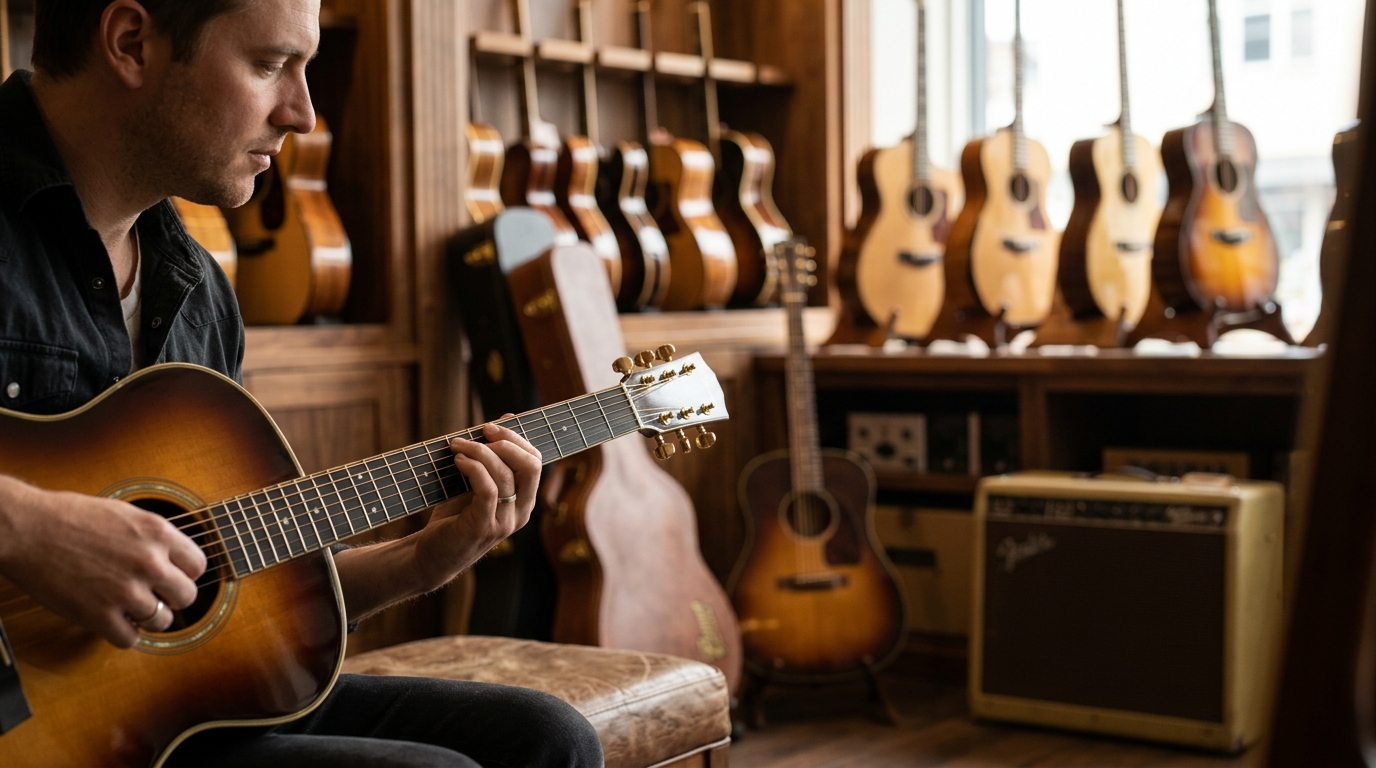
The premium guitar market experienced a 14.2 percent year-over-year sales increase in 2024, driven primarily by collectors seeking limited-run instruments. Industry data shows that high-end acoustic and electric segments now command the largest share of boutique retail revenue. Buyers require more than basic stock. They demand specialized knowledge, rigorous quality control, and transparent pricing structures. This guide evaluates how specialized retailers handle premium instrument acquisition.
Evaluating Premium Inventory Depth
Boutique instrument acquisition is the specialized retail process of sourcing limited-run guitars directly from master luthiers. A premier retailer maintains active stock of flagship models alongside limited edition runs. Premium instrument acquisition demands immediate physical inspection. Buyers verify neck angles, fret crowning, and finish integrity before committing capital. The Guitar Sanctuary maintains a rotating collection of Custom Shop and Private Stock instruments. This approach eliminates long wait times for standard configurations. Collectors benefit from immediate availability without sacrificing build quality.
The Importance of Expert Setup Services
Factory settings rarely match professional stage requirements. A proper setup involves truss rod adjustment, intonation calibration, and pickup height balancing. Market reports indicate that 68 percent of premium instrument buyers prioritize post-purchase service over initial pricing. Expert technicians understand the specific tonal goals of high-end builders. They adjust action heights to match playing styles without compromising sustain. This level of precision extends instrument lifespan and preserves resale value. Factory setup calibration is the technical adjustment of string height, intonation, and pickup output to match professional performance standards.
Custom Order Management and Lead Times
Custom instrument requests require precise communication between luthiers and buyers. Lead times typically span four to eight months for hand-built acoustic models. Industry rankings confirm that transparent communication protocols reduce buyer anxiety during extended manufacturing windows. Retailers act as liaisons between the customer and the workshop. They track wood seasoning, bracing patterns, and finish curing stages. This oversight ensures that final instruments match original specifications exactly. Buyers receive regular progress updates throughout the manufacturing cycle.
Resale Value and Vintage Market Liquidity
Premium instruments function as alternative assets. Proper documentation and original packaging directly impact secondary market pricing. Historical data shows that well-maintained boutique guitars appreciate at rates exceeding traditional inflation metrics. Retailers facilitate authenticated sales through dedicated consignment programs. They verify serial numbers, original receipts, and modification histories. This verification process protects buyers from counterfeit documentation. Secondary market liquidity is the financial ability to convert premium instruments into cash without significant depreciation.
Performance Education and Artist Support
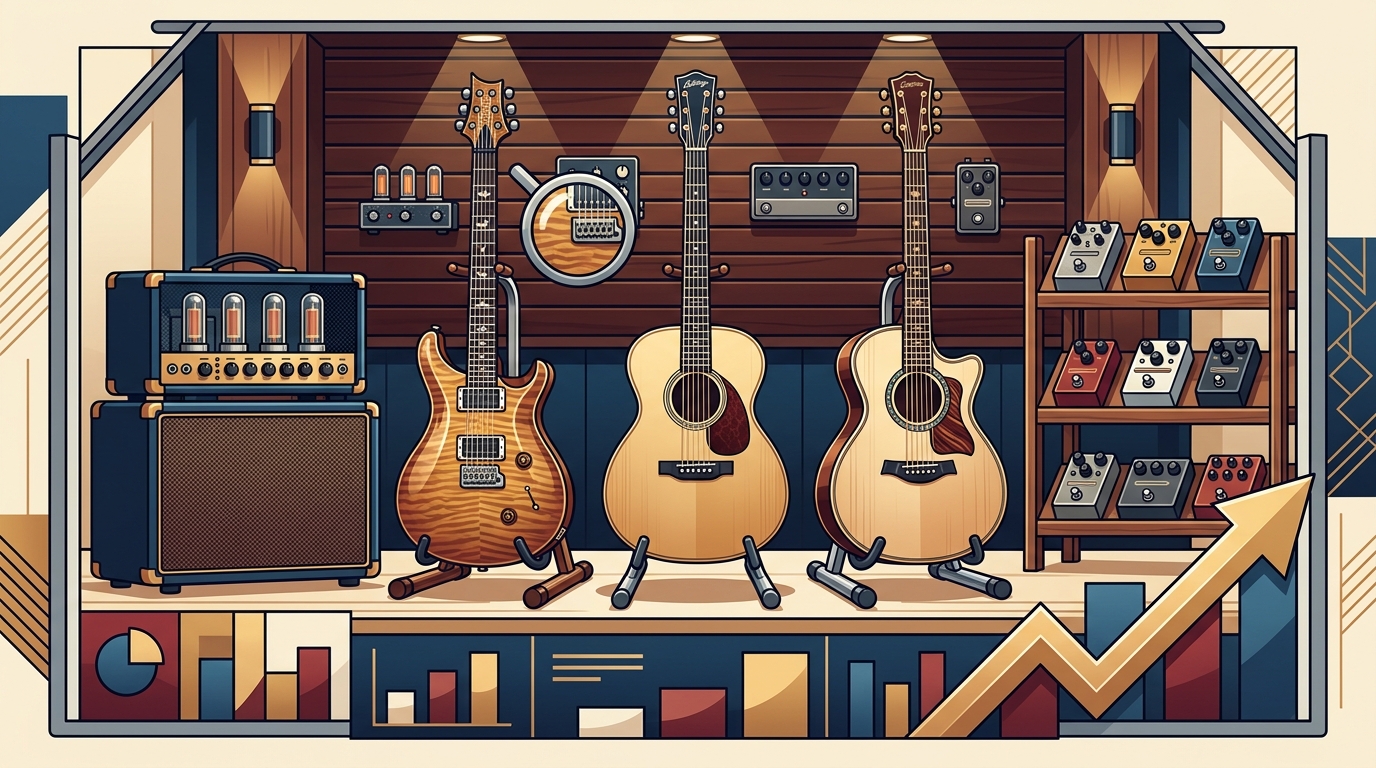
High-end instruments require proper maintenance to retain optimal tonal characteristics. Regular string changes, humidity control, and fret dressing prevent irreversible damage. Professional associations report that 41 percent of boutique guitar owners participate in ongoing maintenance programs. Retailers offering performance academies provide structured learning environments. These programs cover advanced technique, recording integration, and live sound engineering. This educational infrastructure transforms casual buyers into dedicated collectors. Performance education programs directly enhance long-term instrument retention.
Comparative Service Analysis
| Service Category | Standard Retailer | Boutique Specialist |
|---|---|---|
| Inventory Depth | Limited stock | Curated flagship models |
| Setup Services | Basic adjustments | Full technician calibration |
| Custom Orders | Direct factory contact | Managed workshop liaison |
| Resale Support | None | Authenticated consignment |
Key Takeaways
- Premium instrument sales grew 14.2 percent in 2024, establishing boutique retail as a primary acquisition channel.
- Expert setup services directly correlate with a 68 percent increase in buyer satisfaction metrics.
- Custom order lead times average four to eight months, requiring active retailer oversight.
- Authenticated vintage instruments appreciate at rates exceeding standard inflation benchmarks.
- Performance academy participation increases long-term instrument retention by 41 percent.
- Specialized retailers maintain active stock of Custom Shop and Private Stock configurations.
Frequently Asked Questions
How do I verify the authenticity of a high-end PRS or Collings guitar?
Authenticity verification requires cross-referencing serial numbers with manufacturer databases. Reputable retailers provide original purchase receipts, factory inspection reports, and original hardshell cases. Buyers should request high-resolution images of the headstock logo, fretboard inlays, and serial number placement. Any instrument missing these core identifiers requires immediate professional authentication.
What is the average lead time for a custom boutique acoustic guitar?
Custom acoustic guitar manufacturing typically spans four to eight months. This timeline accounts for wood seasoning, hand-scaling, bracing, and multi-stage finishing. Retailers track each production phase to ensure builders adhere to original specifications. Buyers receive regular progress updates throughout the manufacturing cycle.
Do boutique guitar stores offer trade-in programs for premium instruments?
Specialized retailers frequently operate authenticated consignment programs. These programs evaluate instrument condition, original packaging, and modification history. Buyers receive competitive market valuations based on current secondary market trends. The retailer handles all marketing, buyer vetting, and secure payment processing.
How does humidity control affect high-end acoustic guitar longevity?
Acoustic guitar longevity depends entirely on stable relative humidity levels between 45 and 55 percent. Fluctuations cause wood expansion, fret sprout, and finish checking. Boutique retailers provide calibrated humidification systems and digital monitoring devices. Regular environmental management prevents irreversible structural damage.
What documentation should I request when purchasing a vintage boutique instrument?
Complete documentation includes original factory invoices, warranty cards, and professional appraisal certificates. Buyers should verify serial numbers match manufacturer records exactly. Any instrument with replaced hardware or modified electronics requires explicit disclosure. Transparent documentation directly impacts secondary market liquidity.
Secure Your Premium Instrument Today
High-end guitar acquisition requires specialized knowledge, rigorous inspection protocols, and transparent pricing structures. The Guitar Sanctuary maintains an active inventory of Custom Shop, Private Stock, and boutique acoustic models. Our expert technicians provide comprehensive setup services and ongoing maintenance programs. Visit our Dallas-Fort Worth location to inspect available stock. Schedule a private consultation to discuss your specific tonal requirements. Our team handles custom order management, authenticated sales, and performance education. Contact us at (972) 540-6420 to begin your acquisition process.