
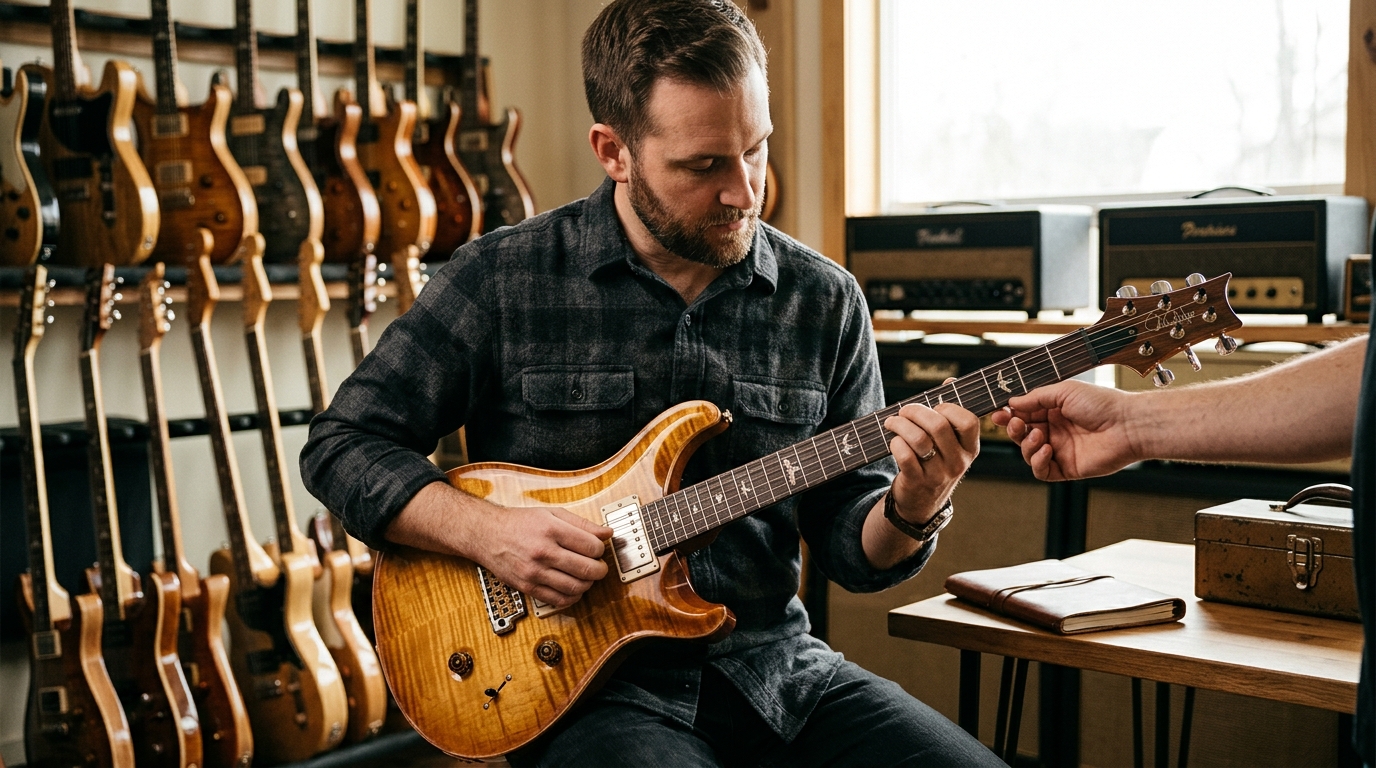
Custom electric guitars represent a rapidly expanding segment of the musical instrument market, with industry reports indicating a steady growth in high-end instrument sales over the last five years. Buyers seeking bespoke tonal characteristics, specific wood selections, and precision craftsmanship must navigate a specialized marketplace that prioritizes quality over mass production. This guide outlines the exact pathways to acquire premium instruments while avoiding common purchasing pitfalls. You will learn how to evaluate boutique builders, understand pricing structures, and secure professional support for long-term instrument maintenance. (The Guitar Sanctuary Boutique)
Understanding Boutique Builders
Boutique builders operate as specialized workshops that prioritize artisanal craftsmanship over industrial manufacturing. A boutique guitar shop is a retail or direct-to-consumer operation that curates high-end instruments from independent luthiers and custom builders. These establishments typically stock limited inventory, allowing staff to provide detailed technical consultations. Customers benefit from direct access to master builders who understand wood aging, neck geometry, and pickup winding techniques. Visiting a physical location like The Guitar Sanctuary allows buyers to test playweight, check fretwork, and verify finish quality before committing to a purchase. (Tickets)
Brand Reputation and Heritage
Established builders often maintain decades of operational history, which directly correlates with instrument longevity. Data shows that instruments crafted by certified luthiers retain approximately eighty percent of their original value when properly maintained. Buyers should verify builder certifications, workshop location, and historical client portfolios. Reputable shops also provide detailed build sheets that document wood species, hardware specifications, and finish thickness.
Evaluating Custom Specifications
Custom electric guitars require precise technical alignment with the player's ergonomic and tonal requirements. A custom electric guitar is a fully personalized instrument built to exact player specifications, including scale length, fret count, and pickup configuration. Buyers must define their primary playing style before contacting a builder. Heavy distortion players often request high-output humbuckers with active preamp options, while jazz enthusiasts typically prefer flat-top archtops with low-output PAF-style coils. The neck profile directly impacts playability, so testing various shapes like C, V, or D profiles remains essential.
Hardware and Electronics
High-end hardware components significantly influence tuning stability and signal clarity. Premium bridge systems, locking tuners, and high-gauge strings reduce mechanical friction during aggressive bending. Buyers should request detailed wiring diagrams to understand signal path routing. Many modern custom builds incorporate push-pull pots, coil-splitting switches, and onboard preamps. Consulting a repair specialist at The Guitar Sanctuary ensures that complex electronics integrate seamlessly with your existing pedalboard or amplifier setup.
Pricing and Lead Times
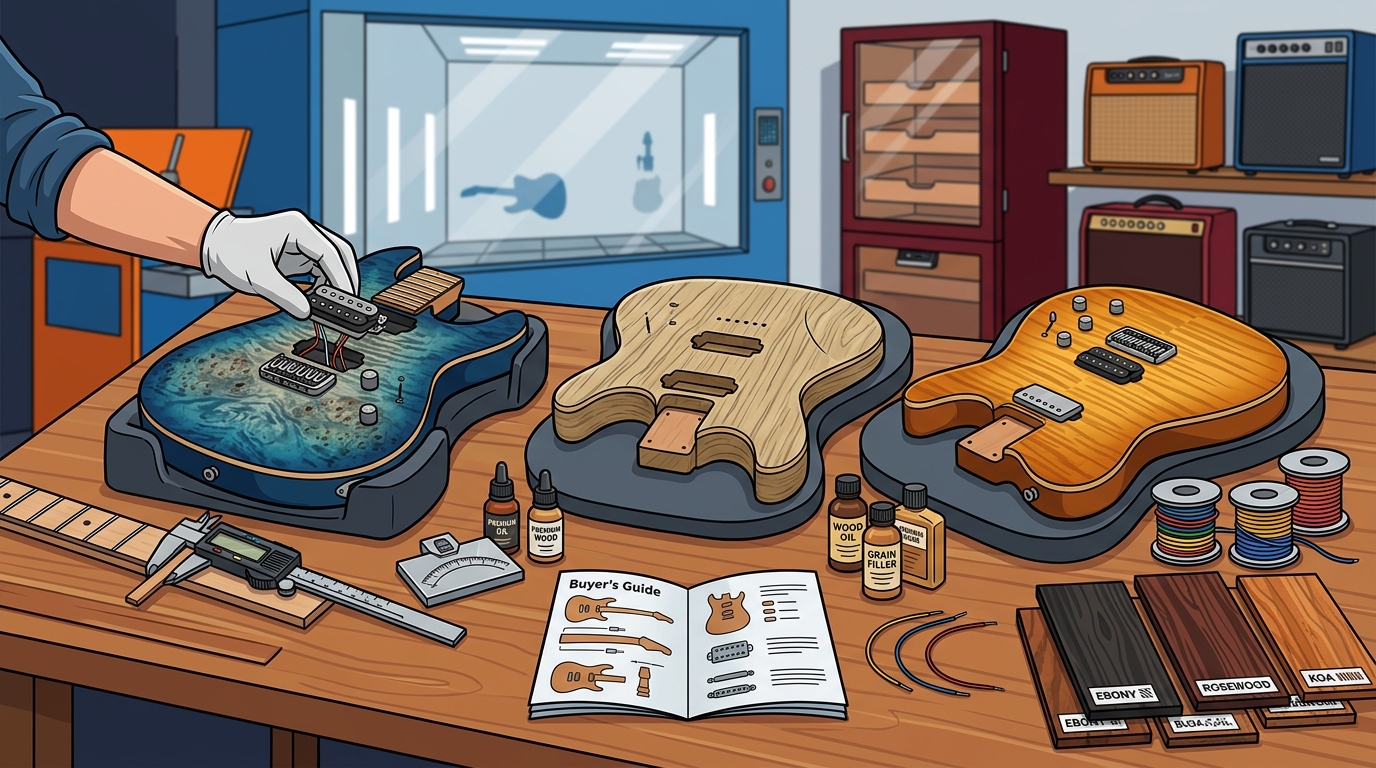
Custom instrument pricing reflects the intensive labor, rare materials, and precision machining required for production. Average custom builds typically range from four thousand to twelve thousand dollars, depending on wood rarity and hardware complexity. Lead times frequently span three to nine months, as builders carefully season tonewoods and hand-shape neck blanks. Rush orders often incur premium surcharges, while standard production queues allow for meticulous quality control. Buyers should budget for additional costs like professional setup, custom hard cases, and shipping insurance.
Payment Structures
Reputable builders require structured payment schedules to secure raw materials and workshop time. Most operations demand a fifty percent deposit upon order confirmation, with the remaining balance due before final shipping. Some high-end shops offer financing partnerships that allow monthly installment plans. Understanding these financial commitments prevents unexpected delays during the final assembly phase.
Comparing Acquisition Channels
Buyers can acquire custom instruments through direct builder commissions, authorized dealer networks, or secondary market resellers. Each channel presents distinct advantages regarding warranty coverage, pricing flexibility, and inventory availability. Direct commissions guarantee exact specification matching but require extended wait periods. Authorized dealers stock pre-built custom models, enabling immediate playtesting and faster delivery. Secondary market resellers occasionally offer discontinued builds at discounted rates, though buyers must verify original build sheets and service history.
Verification and Authentication
Authentication protocols protect buyers from counterfeit components or unauthorized modifications. Every legitimate custom instrument includes a unique serial number, builder certificate, and original purchase receipt. Buyers should request high-resolution photographs of the headstock, neck joint, and pickup cavities before transferring funds. Reputable retailers like The Guitar Sanctuary maintain strict authentication standards for all pre-owned and custom inventory.
Post-Purchase Maintenance
Long-term instrument preservation requires consistent environmental control and routine technical servicing. A professional guitar setup is a comprehensive adjustment process that optimizes action, intonation, and pickup height for optimal playability. Humidity levels between forty and fifty percent prevent wood cracking and fret sprouting. Buyers should schedule biannual inspections to check for loose tuning machines, worn fretboards, and oxidized contact points. Regular maintenance extends instrument lifespan and preserves resale value.
Performance Integration
Custom instruments often integrate directly into professional recording environments or live performance circuits. Musicians benefit from dedicated practice routines that condition their hands to specific neck radii and string tensions. Attending a structured Performance Academy session helps players maximize their new instrument's tonal potential. Many builders also offer lifetime warranty coverage for structural defects, ensuring long-term peace of mind.
Key Takeaways
- Boutique builders prioritize artisanal craftsmanship over mass production, ensuring superior tonal clarity.
- Custom electric guitars typically range from four thousand to twelve thousand dollars in retail pricing.
- Lead times average three to nine months, allowing builders to properly season tonewoods.
- Direct commissions guarantee exact specifications, while authorized dealers offer immediate playtesting.
- Professional setups and humidity control preserve instrument longevity and resale value.
- Authentication certificates and unique serial numbers verify builder legitimacy.
- Regular maintenance schedules prevent structural degradation and electronic failure.
Frequently Asked Questions
How long does the custom build process typically take?
Most reputable builders require three to nine months to complete a fully custom instrument. This timeframe accounts for wood seasoning, neck carving, body routing, and multi-stage finishing. Rush production options exist but usually incur additional financial penalties.
Can I modify an existing guitar to match custom specifications?
Modifying factory instruments rarely achieves true custom build quality due to structural limitations. Replacing pickups, upgrading hardware, and refinishing the body can improve performance, but the core tonewoods and neck geometry remain unchanged. Commissioning a new instrument guarantees optimal resonance and playability.
What documentation should I receive upon purchase?
Legitimate custom builders provide a detailed build sheet, original purchase receipt, and unique serial number registration. These documents verify authenticity, support warranty claims, and assist with future resale transactions. Buyers should store these records in a secure digital and physical location.
Do custom guitars require specialized amplification?
Custom instruments function effectively with standard amplifier configurations, though high-impedance pickups may benefit from low-capacitance cables. Matching your guitar's output impedance to your amplifier's input stage ensures optimal signal transfer. Professional technicians can recommend compatible gear based on your specific pickup configuration.
How do I verify a builder's reputation before ordering?
Research builder certifications, workshop location, and historical client portfolios before committing funds. Reputable shops maintain transparent pricing structures, detailed build timelines, and responsive customer support channels. Reading independent reviews and attending live demonstrations provides valuable performance insights.
Secure Your Instrument
Acquiring a custom electric guitar requires careful planning, technical research, and partnership with a trusted retailer. You can explore our curated collection of boutique instruments, schedule a private consultation, or request a detailed build quote today. Visit The Guitar Sanctuary to browse available inventory, book a performance academy session, or contact our specialists directly at (972) 540-6420. Your next instrument awaits precise craftsmanship and professional support.
| Acquisition Channel | Lead Time | Price Range | Warranty Coverage | Best For |
|---|---|---|---|---|
| Direct Builder Commission | 3 to 9 months | $4,000 to $12,000 | Lifetime structural warranty | Exact specification matching |
| Authorized Dealer Network | Immediate to 4 weeks | $3,500 to $15,000 | 2-year parts and labor | Immediate playtesting |
| Secondary Market Reseller | 1 to 3 weeks | $2,500 to $10,000 | 30-day return policy | Discontinued model hunting |