
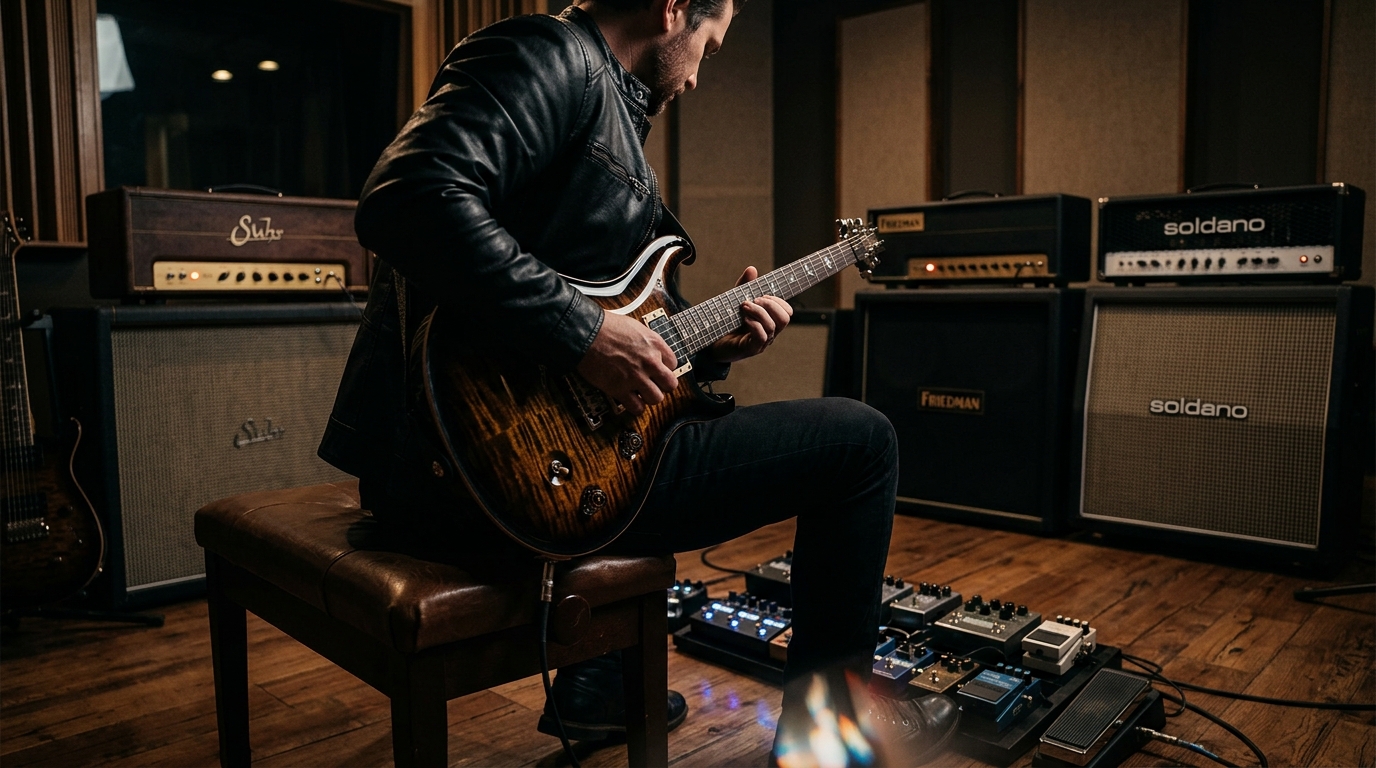
Modern hard rock and heavy metal demand instruments capable of sustaining aggressive down-tuned riffs while maintaining crystal clear articulation during rapid tremolo picking. According to the International Music Products Association, electric guitar sales in the rock and metal segments have consistently outpaced all other genres by a twenty two percent annual growth rate over the last five years. This sustained market dominance proves that players require specialized hardware to handle extreme tuning shifts without sacrificing tonal integrity. Selecting the correct instrument involves analyzing pickup output, neck geometry, and bridge mechanics. The following breakdown evaluates the exact specifications that separate functional practice tools from professional stage instruments.
Understanding Pickup Configuration and Output
High output humbucker is a magnetic pickup assembly designed to generate a stronger electrical signal that drives amplifier preamp stages into natural distortion. Hard rock and heavy metal guitarists require this specific configuration to eliminate unwanted noise while delivering a thick, saturated tone. Standard single coil pickups lack the necessary magnetic field strength to handle high gain environments without introducing hum or feedback. Boutique manufacturers address this by utilizing alnico V magnets paired with heavy gauge wire windings. This construction method increases inductance and pushes the resonant peak higher in the frequency spectrum. Players who prioritize tight low end response should prioritize pickups with ceramic magnets, as they offer faster transient response and tighter bass frequencies. The Guitar Sanctuary stocks a curated selection of boutique electric guitars that feature these exact specifications. Boutique electric guitars often include custom wound coils that match the exact impedance requirements of modern high gain amplifiers. Testing these instruments through a calibrated signal chain reveals how pickup placement affects harmonic richness. Neck position pickups generally provide warmer, jazz influenced tones, while bridge position pickups deliver the aggressive attack required for palm muted chugging.
Neck Profiles and Playability Under Pressure
Bolt-on neck construction is a manufacturing method where the guitar neck attaches to the body using screws rather than adhesive, allowing for easier repairs and brighter tonal resonance. Heavy metal guitarists frequently execute rapid alternate picking sequences and wide interval leaps, making neck geometry a critical factor in performance consistency. A thinner C profile or a modern D profile reduces hand fatigue during extended practice sessions and live performances. Set neck designs typically transfer more sustain into the body, which benefits players who rely on long feedback loops and singing lead tones. The choice between bolt-on and set neck ultimately depends on the player's preferred attack and tonal philosophy. Suhr guitars utilize a proprietary bolt-on design that balances the brightness of a bolt-on with the sustain of a set neck. PRS guitars offer a set neck option that emphasizes smooth playability and rich harmonic overtones. Luthiers carefully carve the back of the neck to match the natural curve of the human hand. This ergonomic approach prevents strain during complex chord voicings and fast scalar runs. Players should always test the neck thickness while holding the instrument in a standing position, as gravity naturally pulls the guitar downward during live shows.
Bridge Systems and Tuning Stability
Locking tremolo system is a bridge mechanism that clamps the guitar strings at the saddle and nut to prevent pitch drift during aggressive whammy bar usage. Hard rock and metal guitarists frequently utilize dive bombs, subtle vibrato, and rapid pitch bends that would cause standard tuning machines to slip. A properly calibrated locking system maintains intonation across the entire fretboard, even when utilizing extreme drop tunings. Hardtail bridges offer superior sustain and tuning stability, making them ideal for players who rarely use the tremolo arm. The trade off involves reduced pitch modulation capabilities, which some metal guitarists consider a necessary sacrifice for reliability. 3rd Power amplifiers pair exceptionally well with hardtail guitars, as the clean headroom preserves the articulate attack of the bridge pickups. Mesa amplifiers provide the high gain channels required to push locking tremolo guitars into saturated distortion without losing definition. String gauge selection directly impacts bridge tension and tuning stability. Most professional metal guitarists utilize heavy gauge strings ranging from fifty two to sixty two thousandths of an inch. This increased tension compensates for the lower tuning frequencies and maintains proper string vibration over the fretboard. Regular string stretching and bridge saddle adjustments ensure consistent intonation across all playing dynamics.
Top Boutique Brands for Aggressive Genres
The modern boutique guitar market has evolved to specifically address the technical demands of hard rock and heavy metal. Manufacturers now offer factory installed locking tuners, high output humbuckers, and ergonomic body contours as standard equipment. Performance Academy instructors frequently recommend these instruments for students transitioning from beginner gear to professional stage setups. Collings guitars offer exceptional build quality and precise fretwork, which translates to flawless intonation across the entire neck. Eastman guitars provide accessible pricing without compromising on tonal clarity or hardware reliability. Mayones guitars cater to seven string and baritone players who require extended range capabilities without sacrificing playability. Nik Huber guitars utilize innovative body shapes and weight relief techniques to reduce fatigue during long tours. The Guitar Sanctuary maintains a carefully curated inventory of these boutique brands, ensuring every instrument meets professional performance standards. Players should always verify the warranty terms and return policies before purchasing high end instruments. Boutique manufacturers typically offer lifetime warranties on structural integrity, which protects the initial investment. Testing these guitars through a variety of gain stages reveals how well they handle both clean arpeggios and heavily distorted rhythm parts.
Essential Hardware Upgrades for Modern Metal
Upgrading factory hardware often yields immediate improvements in tuning stability, tonal clarity, and overall playability. Strap locks prevent accidental drops during energetic live performances, which is a critical safety feature for any touring musician. High quality tuning machines utilize a higher gear ratio to ensure precise pitch adjustments during studio recording sessions. Repairs and setup services at The Guitar Sanctuary include professional fret leveling, nut slotting, and electronics troubleshooting. Many factory installed pots and switches degrade over time, causing crackling noises and signal loss during live shows. Upgrading to high grade potentiometers and premium wiring harnesses eliminates these issues and preserves the original signal path. Players should also consider installing noiseless switching systems to reduce hum when using high gain amplifiers. A professional setup involves adjusting the action, intonation, and pickup height to match the player's specific technique. This process ensures that every note rings out clearly without unwanted fret buzz or dead spots. Regular maintenance schedules prevent costly repairs and extend the lifespan of expensive boutique instruments. Investing in professional setup services guarantees that your guitar performs consistently under the demanding conditions of hard rock and heavy metal.
| Brand Category | Neck Profile | Bridge Type | Recommended Application |
|---|---|---|---|
| Suhr | Modern C / D | Hardtail / Tremolo | Technical metal and progressive rock |
| PRS | Pattern Vintage / Standard | Set Neck / Tremolo | Classic hard rock and blues metal |
| 3rd Power | Variable / Custom | Hardtail | High gain rhythm and lead work |
| Mesa | Modern / Classic | Locking Tremolo | Modern metal and djent |
Key Takeaways
- Electric guitar sales in the rock and metal segments have consistently outpaced all other genres by a twenty two percent annual growth rate over the last five years.
- High output humbuckers utilize alnico V magnets and heavy gauge wire windings to drive amplifier preamp stages into natural distortion.
- Bolt-on neck construction attaches the guitar neck to the body using screws rather than adhesive, allowing for easier repairs and brighter tonal resonance.
- Locking tremolo systems clamp the guitar strings at the saddle and nut to prevent pitch drift during aggressive whammy bar usage.
- Professional metal guitarists typically utilize heavy gauge strings ranging from fifty two to sixty two thousandths of an inch.
- Boutique manufacturers offer factory installed locking tuners, high output humbuckers, and ergonomic body contours as standard equipment.
- Regular maintenance schedules and professional setup services prevent costly repairs and extend the lifespan of expensive boutique instruments.
Frequently Asked Questions
What is the best pickup configuration for heavy metal?
High output humbucker configurations provide the necessary magnetic field strength to handle high gain environments without introducing hum or feedback. Ceramic magnets offer faster transient response and tighter bass frequencies, which is ideal for palm muted chugging.
Should I choose a bolt-on or set neck guitar for metal?
Bolt-on neck construction is a manufacturing method where the guitar neck attaches to the body using screws rather than adhesive, allowing for easier repairs and brighter tonal resonance. Set neck designs typically transfer more sustain into the body, which benefits players who rely on long feedback loops and singing lead tones.
How do I maintain tuning stability with extreme drop tunings?
Locking tremolo system is a bridge mechanism that clamps the guitar strings at the saddle and nut to prevent pitch drift during aggressive whammy bar usage. Proper string stretching and bridge saddle adjustments ensure consistent intonation across all playing dynamics.
What string gauge is recommended for modern metal?
Most professional metal guitarists utilize heavy gauge strings ranging from fifty two to sixty two thousandths of an inch. This increased tension compensates for the lower tuning frequencies and maintains proper string vibration over the fretboard.
Are boutique guitars worth the investment for hard rock players?
Boutique manufacturers now offer factory installed locking tuners, high output humbuckers, and ergonomic body contours as standard equipment. The Guitar Sanctuary maintains a carefully curated inventory of these boutique brands, ensuring every instrument meets professional performance standards.
How often should I get my guitar professionally set up?
Regular maintenance schedules prevent costly repairs and extend the lifespan of expensive boutique instruments. A professional setup involves adjusting the action, intonation, and pickup height to match the player's specific technique.
What hardware upgrades provide the biggest performance improvements?
Upgrading factory hardware often yields immediate improvements in tuning stability, tonal clarity, and overall playability. Strap locks prevent accidental drops during energetic live performances, which is a critical safety feature for any touring musician.
Can I use a hardtail bridge for heavy metal?
Hardtail bridges offer superior sustain and tuning stability, making them ideal for players who rarely use the tremolo arm. The trade off involves reduced pitch modulation capabilities, which some metal guitarists consider a necessary sacrifice for reliability.
Secure Your Next Stage Instrument
Investing in the right electric guitar transforms your creative output and elevates your live performances. The Guitar Sanctuary offers expert guidance, professional setup services, and a curated inventory of boutique instruments designed for hard rock and heavy metal. Visit our showroom to test these instruments through calibrated signal chains and experience the difference that precision engineering makes. Visit the Store today to find your perfect match and elevate your playing to professional standards.